Baked Feta Pasta Recipe
↓ Jump to Recipe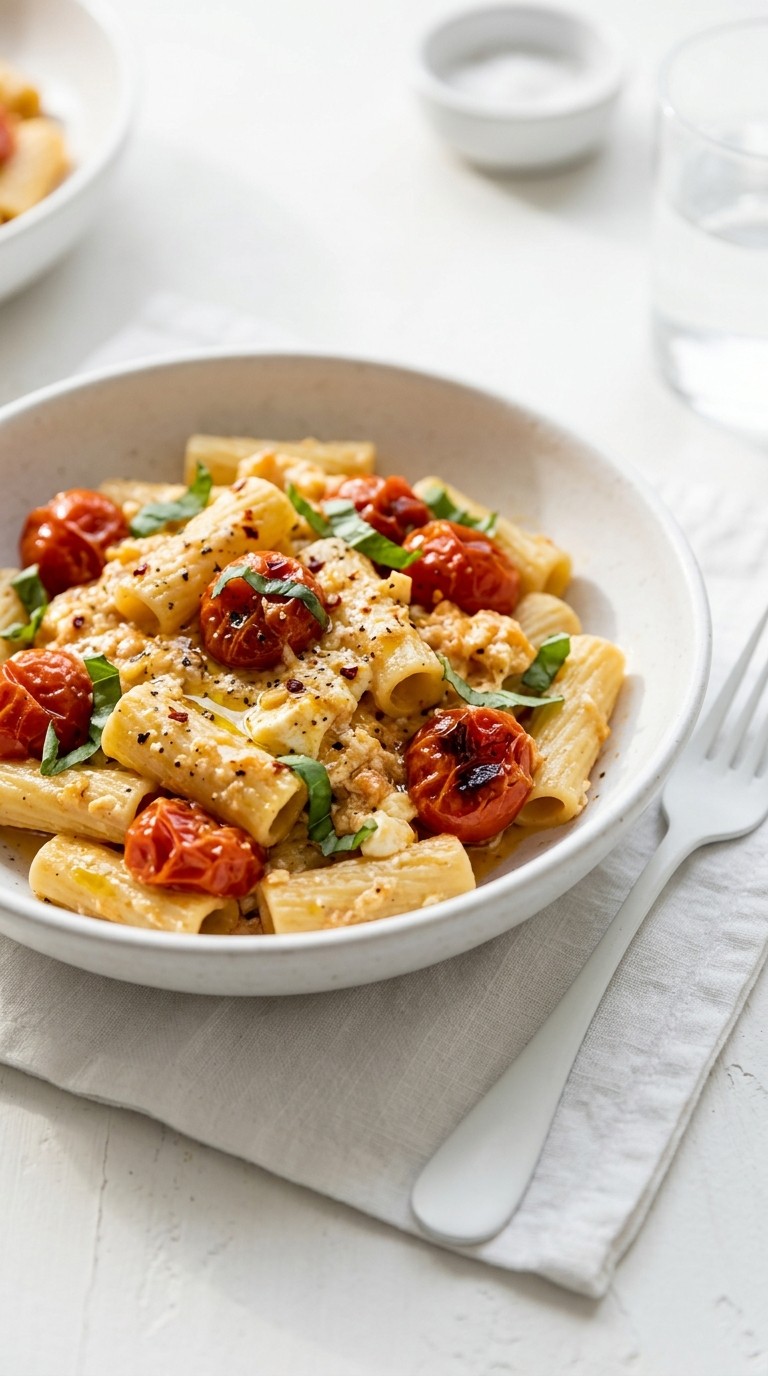
Learn how to make rich baked feta pasta with cherry tomatoes, garlic, olive oil, and fresh basil. A simple weeknight dinner ready in 35 minutes.
Baked feta pasta transforms a handful of standard produce and pantry staples into a rich, velvety sauce with almost no active effort. Whole cherry tomatoes and a block of Greek feta roast together until blistered, softened, and deeply caramelized. Fresh garlic and extra virgin olive oil infuse the base while your pasta boils on the stovetop. Once combined with starchy cooking water, the cheese and tomato juices emulsify into a balanced sauce that clings to every noodle. It is an approachable, comforting meal suited for busy weeknights or casual gatherings.
Ingredients
- 8 oz / 225 g whole block Greek feta cheese (in brine, drained)
- 2 pints / 600 g cherry or grape tomatoes
- 1/2 cup / 120 ml extra virgin olive oil
- 4 cloves garlic, minced
- 1/2 tsp / 1 g crushed red pepper flakes
- 1 tsp / 2 g dried oregano
- 1/2 tsp / 3 g fine sea salt
- 1/4 tsp / 1 g freshly cracked black pepper
- 10 oz / 285 g dry pasta, such as rigatoni, cavatappi, or penne
- 1 cup / 240 ml reserved starchy pasta cooking water
- 1 cup / 25 g fresh basil leaves, loosely packed and chopped
- 1 tsp / 2 g freshly grated lemon zest (optional, for brightness)
Choosing high-quality components ensures the cleanest and richest profile for this skillet-style baked meal. Seek out authentic sheep's milk feta packed in brine rather than dry vacuum-sealed packages or cow's milk alternatives, which melt with a much drier consistency. Small, sweet cherry or grape tomatoes offer the highest natural sugar and pectin content, which breaks down under direct heat into a jammy pan sauce.
Short, tubular pasta varieties like rigatoni, penne, or cavatappi excel at catching the chunky pieces of tomato and rich cheese inside their ridges. Fresh basil must be stirred in strictly off the heat at the very end to preserve its delicate herbal volatile oils and bright green hue.
Essential Kitchen Tools
This preparation relies primarily on the thermal properties of your cookware. Selecting dishes that maintain even radiant heat guarantees the cheese softens thoroughly without scorching on top.
| Tool | Purpose | Why It Matters |
|---|---|---|
| 9x13-inch Ceramic or Glass Baking Dish | Roasting cheese and tomatoes | Provides sufficient surface area so tomatoes roast rather than steam, while retaining warmth for mixing. |
| Large Stockpot | Boiling pasta | Allows adequate water volume so pasta cooks evenly without sticking or cooling the boil. |
| Liquid Measuring Cup | Reserving pasta water | Provides heat-safe collection of the starchy cooking water needed to emulsify the pan sauce. |
| Sturdy Wooden Spoon or Potato Masher | Mashing baked components | Quickly breaks down intact tomato skins and incorporates softened feta into a homogeneous emulsion. |
| Fine Mesh Colander | Draining boiled pasta | Separates water thoroughly from pasta surfaces so the sauce adheres directly to the starch. |
Why This Recipe Works
The foundation of this dish hinges on high-heat roasting to achieve natural emulsification. As cherry tomatoes bake past the 375°F (190°C) threshold, their internal moisture expands until the skins split open. The released juices combine with warm olive oil and concentrated tomato sugars, creating an acidic liquid phase in the bottom of the dish.
Simultaneously, the feta cheese warms from the outside inward. Although true feta does not melt completely like mozzarella due to its protein structure, the heat softens the curds and gently browns the exterior. When crushed with the tomato juices, the softened curds suspend evenly in the hot fat.
The critical bonding agent is the reserved pasta water. Enriched with starches shed by the boiling noodles, this cooking liquid acts as a stabilizer. When mixed into the baking dish, the starches prevent the dairy fat and olive oil from separating, binding everything into a cohesive, velvety sauce that coats every ridge of the pasta.
Pro Tips for Better Results
Achieving the best balance of texture and flavor requires a few foundational techniques common to Mediterranean pasta cookery.
- Keep the Feta in One Piece: Leave the cheese block whole during roasting. This prevents the interior moisture from evaporating prematurely, keeping the curd pliable and easy to smooth into a sauce.
- Do Not Skimp on Olive Oil: The half-cup of extra virgin olive oil is not merely a cooking medium; it forms half of the sauce body. A generous measure prevents the garlic from scorching and enriches the acidic tomato juices.
- Salt the Water Conservatively: Because feta cheese is preserved in a salty brine, taste the combined sauce before adding additional salt to the finished dish. Salt your pasta water with a light hand compared to normal preparations.
- Reserve More Water Than You Think You Need: Always scoop out a full cup of pasta water before draining. Starch contents vary by pasta brand, and having extra liquid nearby ensures you can correct a stiff sauce immediately.
- Toss Off the Direct Heat: Combine the pasta, sauce, and fresh herbs entirely within the warm ceramic baking dish or a separate mixing bowl. Direct stovetop heat after mixing can cause the dairy proteins to tighten and separate.
Nutrition Facts (per serving)
Values below are calculated based on 5 equal servings prepared using standard dry wheat rigatoni, full-fat Greek sheep's milk feta, and olive oil.
| Nutrient | Amount per Serving | % Daily Value |
|---|---|---|
| Calories | 520 kcal | 26% |
| Total Fat | 28 g | 36% |
| Saturated Fat | 9 g | 45% |
| Cholesterol | 45 mg | 15% |
| Sodium | 640 mg | 28% |
| Total Carbohydrates | 52 g | 19% |
| Dietary Fiber | 4 g | 14% |
| Total Sugars | 5 g | — |
| Protein | 15 g | 30% |
| Calcium | 260 mg | 20% |
Baked Feta Pasta Recipe
Learn how to make rich baked feta pasta with cherry tomatoes, garlic, olive oil, and fresh basil. A simple weeknight dinner ready in 35 minutes.
Ingredients
Instructions
- Preheat your oven to 400°F (200°C) with a rack set in the center position so the heat circulates evenly around the baking dish.
- Place the cherry tomatoes in a 9x13-inch (23x33 cm) oven-safe baking dish and toss them with half of the extra virgin olive oil, minced garlic, red pepper flakes, dried oregano, salt, and black pepper.
- Clear a space in the center of the dish and set the block of feta cheese directly on the bottom, coating its top with the remaining olive oil to prevent the surface from drying out.
- Bake uncovered for 30 to 35 minutes until the tomatoes burst their skins and release juices, and the edges of the feta turn light golden brown.
- Bring a large pot of water seasoned generously with salt to a rolling boil while the vegetables and cheese bake.
- Cook the dry pasta according to the package directions until it reaches an al dente texture, retaining a firm bite in the center.
- Carefully ladle out and reserve at least 1 cup (240 ml) of the hot starchy pasta water before draining the remaining contents through a colander.
- Remove the baking dish from the oven and immediately use a sturdy wooden spoon or fork to mash the softened feta and blistered tomatoes together into a cohesive, creamy sauce.
- Pour the drained pasta and half of the reserved pasta water into the baking dish, stirring vigorously so the starch bonds the fat and juices together smoothly.
- Fold in the fresh chopped basil and lemon zest, drizzling in an additional splash of cooking water if needed to loosen the texture, and serve hot.