Simple Konjac Jelly for Low Calorie Snacking
↓ Jump to Recipe
Discover how to prepare a refreshing, low-calorie konjac jelly. This high-fiber treat is perfect for keeping you satisfied while managing your weight.
Navigating the landscape of healthy eating often feels like a constant struggle between wanting something sweet and maintaining your nutritional goals. Many of us find that the biggest hurdle in any weight management plan is that nagging sensation of hunger between meals. It is not about restrictive habits or joyless meals; rather, it is about finding smart, functional foods that provide a sense of satiety without overwhelming your daily energy balance.
That is exactly why I recommend exploring this konjac jelly. By utilizing the unique properties of glucomannan, you can create a delightful snack that feels substantial and refreshing while being incredibly light on calories. This isn't just another dessert; it is a strategic addition to your kitchen arsenal that helps keep cravings at bay. Having a reliable, low-energy snack on hand is one of the most effective ways to stay consistent with your long-term wellness ambitions.
In this guide, I will walk you through the logic of using this versatile ingredient and show you how to prepare a batch that is both simple and effective. It is time to stop viewing snacks as obstacles to your success and start using them as building blocks for a healthier, more satisfied version of yourself.
Table of Contents
The Science of Fiber and Fullness
The primary reason this snack performs so well is the inclusion of konjac powder, a concentrated source of a soluble fiber known as glucomannan. Unlike many snack foods that are quickly digested and leave you reaching for more, this specific fiber absorbs a significant volume of liquid. This expansion process creates a viscous gel that occupies space in the stomach, naturally encouraging a lingering feeling of fullness.
Because the caloric density of the final result is so low, you are essentially getting the mechanical benefit of fiber without the heavy metabolic load of traditional treats. It serves as a perfect buffer when you are feeling the urge to graze but want to honor your commitment to a moderate daily caloric intake. It is a classic example of working with your biology rather than against it.
Essential Gear and Technical Precision
To achieve that signature bouncy texture, you must pay attention to your technique. You will need a sturdy whisk to incorporate the powder into your liquid base effectively. If you do not dissolve the powder completely at the start, you risk creating stubborn clumps that will mar the final consistency of your jelly. A reliable medium saucepan is also vital to ensure that the heat is distributed evenly as the mixture begins to thicken.
Precision in measurement is equally important here. Because konjac powder is highly effective at absorbing liquid, even small variations in the quantity used can significantly change the outcome. Using standard measuring tools ensures that your results are consistent batch after batch. Once your mixture is ready, having a shallow glass dish or a set of ramekins prepared will make the cooling process seamless.
Ingredients You Will Need
Simple Konjac Jelly for Low Calorie Snacking
Discover how to prepare a refreshing, low-calorie konjac jelly. This high-fiber treat is perfect for keeping you satisfied while managing your weight.
Ingredients
Instructions
- Combine the konjac powder with a half-cup of cold water in a medium saucepan, whisking vigorously until the powder has fully integrated.
- Pour the remaining 3.5 cups of water into the saucepan, then whisk in the sweetener, the vanilla extract, and the green food coloring until the mixture is uniform.
- Place the saucepan over medium heat, stirring constantly, and bring the liquid to a gentle boil.
- Lower the heat to a simmer and continue to stir for 2 to 3 minutes until the liquid transitions into a slightly thickened, translucent state.
- Carefully transfer the hot mixture into a glass baking pan or individual ramekins and let it sit at room temperature for 30 minutes to begin the cooling phase.
- Move the containers to the refrigerator for at least 2 hours, or until the jelly has set into a firm, jiggly consistency.
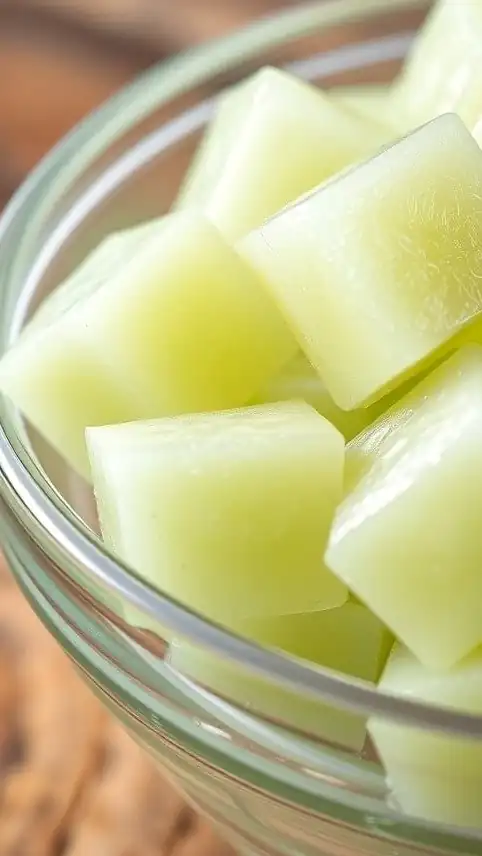
- Slice the set jelly into bite-sized cubes and serve immediately while cold.