Understanding Collagen Versus Gelatin Science

Explore the real differences between collagen and gelatin. Learn how to choose the right form for your health goals and culinary projects today.
Navigating the world of protein supplementation often leads us to two closely related yet distinct substances: collagen and gelatin. While both originate from the same natural animal tissues, the way they are processed fundamentally changes how they behave in your kitchen and your body. Grasping these nuances is the first step toward making smarter decisions about which product serves your specific wellness or culinary objectives.
At the heart of the matter, both substances provide essential amino acids that support the structural integrity of our bodies. However, their molecular forms dictate their functionality. Whether you are looking to enhance your morning coffee or seeking the perfect thickener for a homemade dessert, knowing the practical application of each is essential for achieving the best possible outcome.
Table of Contents
The Molecular Relationship
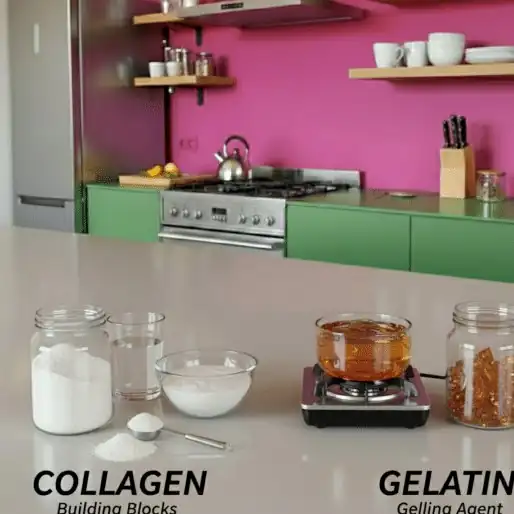
To visualize the connection, think of collagen as the raw, structural building block found in the connective tissues of animals. It is a dense, fibrous protein that provides necessary support to skin, cartilage, and bone. In its original state, it is quite resistant to changes in temperature, maintaining its complex structure even when exposed to mild heat.
Gelatin is what occurs when this structural protein undergoes a significant transformation through controlled heating and processing. This degradation process partially breaks down the long protein chains. Because of this alteration, the resulting substance gains the ability to interact with water in a way that the original fibrous protein cannot, specifically by forming a semi-solid structure upon cooling.
Culinary Roles and Textures
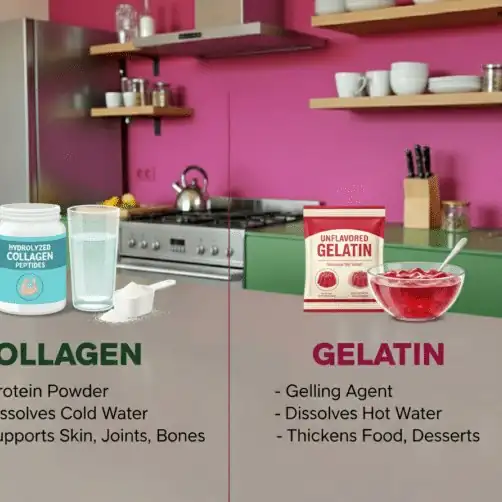
When it comes to the kitchen, the behavior of these two proteins is vastly different. Gelatin is the undisputed star of texture modification. Because it traps liquid within a protein network, it is the primary component for creating stable structures like custards, chilled desserts, or thickened sauces. It requires specific thermal handling, usually involving hydration in a cool liquid followed by gentle warming, to ensure a smooth, clump-free consistency.
Collagen, particularly in its hydrolyzed form, acts entirely differently. It is designed to dissolve completely into liquids, whether hot or cold, without creating a thickened or gummy texture. This makes it an incredibly versatile addition to beverages, soups, or even oatmeal, where you want the nutritional benefits of the protein without affecting the mouthfeel of the final dish.
Absorption and Bioavailability
The primary reason people choose hydrolyzed collagen as a daily supplement is its superior bioavailability. Through a process of enzymatic breakdown, the long protein chains are reduced into tiny segments known as peptides. These smaller units are much easier for the human digestive system to process and transport into the bloodstream, where they can be utilized for skin elasticity and joint maintenance.
While gelatin is rich in the same amino acids, it is not broken down to the same extent. When consumed, it requires more intensive digestion to reach the same level of absorption. This does not mean it lacks value; rather, its utility is focused differently. Its slower digestion and protective coating properties are often valued for supporting gut lining health, serving as a functional food rather than a high-speed nutrient deliverable.
Types and Sourcing
Both substances are categorized by the primary types of proteins they provide, which are usually labeled as Type I, II, or III. Type I and III are most commonly associated with supporting skin hydration and bone density, while Type II is frequently sought after for its specific role in cushioning joints. These types remain consistent regardless of whether you are consuming them as collagen peptides or as gelatin.