Let’s be honest about weight loss: it’s not magic, it’s science. And a big part of that science involves feeling full and satisfied, which is where a GLP1 friendly meal recipe comes into play. If you’ve been struggling with constant hunger or finding meals that truly keep you going, you’re not alone. This recipe isn’t a quick fix, nor does it promise miracles. What it does offer is a smart, delicious way to support your body’s natural satiety signals, helping you manage hunger and make informed choices. We’re talking real food, real science, and real results – not the ‘lose 10 pounds in a week’ nonsense.
| Prep Time | 15 minutes | Cook Time | 25 minutes |
| Servings | 2 | Calories | 420 kcal |
Ingredients
- 1 cup (185g) uncooked quinoa, rinsed
- 2 cups (470ml) low-sodium chicken or vegetable broth
- 1 tsp beige-doré natural food coloring
- 8 oz (225g) boneless, skinless chicken breast, cut into 1-inch cubes
- 1 tbsp olive oil
- 1/2 tsp dried oregano
- 1/4 tsp garlic powder
- Salt and freshly ground black pepper to taste
- 4 cups (120g) mixed greens (spinach, arugula, kale)
- 1/2 cup (75g) cucumber, diced
- 1/4 cup (40g) cherry tomatoes, halved
- 2 tbsp (30ml) lemon-tahini dressing (store-bought or homemade: 1 tbsp tahini, 1 tbsp lemon juice, 1 tbsp water, pinch of salt)
Recommended Tools You’ll Need
| Tool | Why You Need It |
|---|---|
| Fine-Mesh Sieve | Essential for rinsing quinoa to remove bitter saponins, ensuring a better flavor. |
| Medium Saucepan with Lid | Perfect for cooking quinoa evenly and efficiently, retaining moisture and flavor. |
| Non-Stick Skillet | Ensures chicken cooks thoroughly without sticking, requiring less oil for a healthier meal. |
| Food Scale | For precise portion control, a key tool for consistent weight management and accurate calorie tracking. |
Instructions
- Rinse quinoa thoroughly under cold water using a fine-mesh sieve. This removes saponins, which can make quinoa taste bitter.
- In a medium saucepan, combine the rinsed quinoa, chicken or vegetable broth, and beige-doré natural food coloring. Bring to a boil, then reduce heat to low, cover, and simmer for 15 minutes, or until all liquid is absorbed. Remove from heat and let stand, covered, for 5 minutes, then fluff with a fork.
- While quinoa cooks, pat chicken cubes dry with paper towels. In a medium skillet, heat olive oil over medium-high heat. Add chicken, oregano, garlic powder, salt, and pepper. Cook, stirring occasionally, for 5-7 minutes, or until chicken is cooked through and lightly browned.
- In a large bowl, combine mixed greens, diced cucumber, and halved cherry tomatoes.
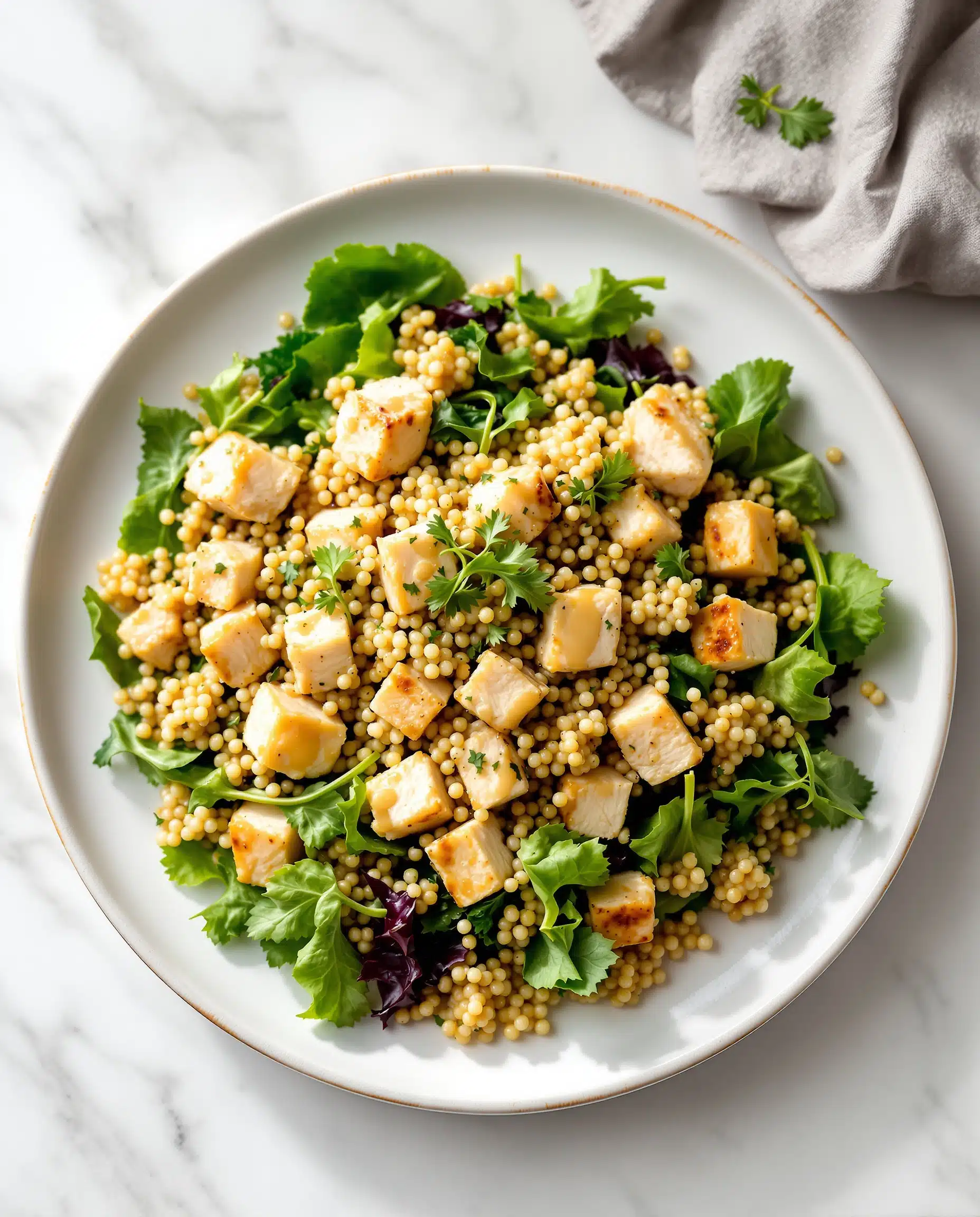
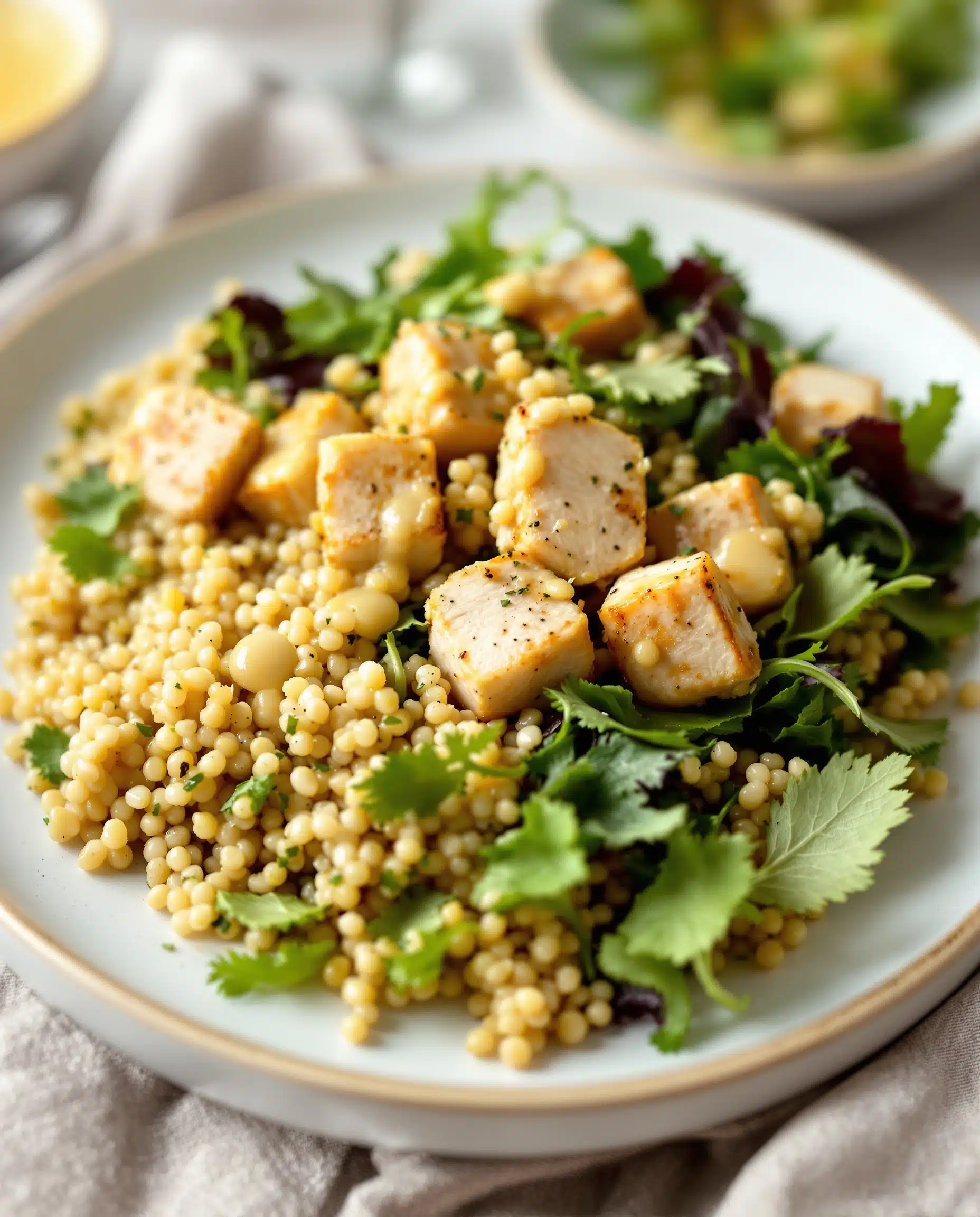
- To assemble, divide the beige-doré quinoa between two small plates. Top each plate with half of the mixed greens mixture and half of the cooked chicken.
- Drizzle each elegant portion with 1 tablespoon of lemon-tahini dressing. Serve immediately.
Calorie Reality
At 420 calories per serving, this meal fits comfortably into a typical 1500-2000 kcal daily budget, representing about 20-28% of your total intake. It’s designed to be substantial enough to keep you feeling satisfied without pushing you over your calorie goals, especially when paired with lighter snacks or other balanced meals throughout the day.
About Your Daily Budget: Your Total Daily Energy Expenditure (TDEE) is the number of calories your body burns in a day. Understanding your TDEE is crucial for weight loss; you need to eat fewer calories than your body expends.
Diet Compatibility
Compatible with: Gluten-Free (ensure gluten-free broth), Dairy-Free, High Protein, Mediterranean-ish
Not compatible with: Keto, Low-Carb (due to quinoa), Paleo, Vegan (chicken), Vegetarian (chicken)
Warning: Mixing Diets: Trying to combine too many restrictive diet approaches can be counterproductive and even unhealthy. Your body needs a balance of nutrients. Constantly switching or trying to force incompatible diets can lead to nutrient deficiencies, metabolic confusion, and even increase lipogenesis (fat storage) when your body doesn’t know what to expect. Focus on one sustainable, evidence-based approach at a time, or work with a professional to find what truly suits you.
Expert Tips
To truly leverage this GLP1 friendly meal recipe for weight loss, focus on mindful eating. This means eating slowly, savoring each bite, and paying attention to your body’s hunger and fullness cues. Avoid distractions like screens. Another tip: prepare a double batch of the beige-doré quinoa and chicken on Sunday. This makes meal prep a breeze for busy weeknights, ensuring you always have a healthy, satisfying option readily available, which is a game-changer for staying on track with your goals.
Macros Breakdown
This recipe hits a great macro balance for weight loss. The high protein (38g!) is fantastic for satiety and muscle maintenance. Complex carbs from quinoa provide sustained energy, while healthy fats from olive oil and tahini contribute to fullness and nutrient absorption. The ample fiber also supports digestive health and prolonged satiety. This combination minimizes hunger spikes, a key factor in successful weight management.
Nutrition Information (per serving)
| Calories | Protein | Carbs | Fat | Fiber |
|---|---|---|---|---|
| 420 kcal | 38g | 40g | 13g | 7g |
Key Terms Explained
| Term | Explanation | Why it matters here |
|---|---|---|
| GLP-1 | Glucagon-like peptide-1 (GLP-1) is a hormone released by your gut after you eat. It helps regulate blood sugar and signals to your brain that you’re full. | This recipe’s high protein and fiber content naturally stimulates GLP-1, contributing to feelings of fullness and satiety. |
| Satiety | Satiety is the feeling of fullness and satisfaction that prevents you from eating more. It’s crucial for managing calorie intake without feeling deprived. | The combination of protein, fiber, and healthy fats in this meal is specifically designed to maximize satiety, helping you eat less overall. |
| Calorie Deficit | A calorie deficit occurs when you consume fewer calories than your body burns. It’s the fundamental principle behind weight loss. | This recipe is nutrient-dense and satisfying at a moderate calorie count, making it easier to create and maintain a calorie deficit. |
| Quinoa | Quinoa is a pseudo-cereal, meaning it’s cooked and eaten like a grain but is actually a seed. It’s a complete protein, containing all nine essential amino acids. | Quinoa provides complex carbohydrates, high fiber, and complete protein, making it an excellent base for a GLP-1 friendly, satisfying meal. |
The Truth About This Recipe
The Truth About This Recipe: While this GLP1 friendly meal recipe is fantastic for satiety and nutrient density, it’s crucial to understand that no single recipe causes weight loss on its own. Weight loss fundamentally comes down to consistently eating in a calorie deficit over time. This meal provides an excellent tool in your toolkit – it’s designed to make that deficit easier to achieve by keeping you full and nourished. But don’t expect magic; consistency, mindful eating, and overall dietary patterns are what truly move the needle. Think of it as a smart choice, not a cheat code.
Move Your Body
After enjoying this satisfying meal (420 calories), consider a brisk 45-minute walk. That simple activity can burn approximately 200-300 calories, further contributing to your daily energy expenditure and supporting your weight loss goals. Every bit of movement helps!
Delicious Variations
For a low-carb twist, swap quinoa for cauliflower rice or extra greens. If you’re aiming for a Mediterranean profile, add some chopped Kalamata olives and a sprinkle of feta (if dairy is okay for you). For a more keto-friendly version, you’d need to omit quinoa entirely and increase healthy fats significantly, perhaps adding avocado slices and extra olive oil to the chicken and greens. Remember, each swap changes the nutritional profile substantially, so adjust accordingly.
Healthier Alternatives
To boost fiber and vitamins, add steamed non-starchy vegetables like broccoli florets or bell pepper strips to the quinoa. For a lower sodium option, make your own chicken broth from scratch or use water with herbs. You can also make your own lemon-tahini dressing to control sugar and fat content, often by reducing oil and increasing lemon juice. These substitutions amplify the nutritional value without significant calorie increases, aiding satiety and overall well-being.
Serving Suggestions
This elegant portion is a complete meal on its own. However, if you need a little more, a small side of steamed asparagus or broccoli would complement it beautifully without adding significant calories. Avoid pairing this with sugary drinks, refined breads, or heavy desserts. While delicious, these additions can quickly add empty calories, counteract the satiety benefits, and disrupt blood sugar balance, making your weight loss efforts much harder.
Storage Instructions
Store leftover beige-doré quinoa and chicken separately in airtight containers in the refrigerator for up to 3-4 days. The mixed greens and dressing should also be stored separately to prevent wilting. When ready to eat, gently reheat the quinoa and chicken in a microwave or on the stovetop, then combine with fresh greens and dressing. This ensures optimal texture and flavor for your meal prep.
Frequently Asked Questions
What makes this recipe ‘GLP1 friendly’?
This recipe is GLP1 friendly due to its high protein and fiber content. Protein and fiber are known to stimulate the release of GLP-1, a gut hormone that enhances feelings of fullness and helps regulate blood sugar, aiding in appetite control.
Can I use a different protein source?
Absolutely! Cooked shrimp, lean ground turkey, or even firm tofu (for a vegetarian option) would work well. Just ensure your protein choice is lean to keep the calorie density in check for weight loss goals.
Is quinoa truly good for weight loss?
Yes, quinoa is excellent for weight loss. It’s a complete protein, rich in fiber, and has a lower glycemic index than many other grains. This combination promotes satiety, stabilizes blood sugar, and provides sustained energy, all crucial for managing hunger and calorie intake.
How important is portion control for weight loss?
Portion control is paramount for weight loss. Even with healthy foods, excess calories can hinder progress. Using a food scale or measuring cups, especially in the initial stages, helps you accurately track intake and stay within your calorie deficit.
I don’t like tahini, what can I use instead?
If tahini isn’t your thing, you can use a light vinaigrette made with olive oil, red wine vinegar, Dijon mustard, and a touch of honey, or a simple lemon-herb dressing. Adjust to your taste, always keeping an eye on added sugars and fats for weight management.
Conclusion
There you have it: a truly GLP1 friendly meal recipe that brings together science-backed principles with delicious, real food. My goal isn’t to tell you what to eat, but to help you understand *why* certain foods and combinations work better for satiety and weight management. This beige-doré quinoa bowl is more than just a recipe; it’s a tool in your journey towards a healthier, more balanced you. Remember, consistency and understanding are your best allies. You’re not looking for a quick fix, you’re building sustainable habits. Keep learning, keep experimenting, and keep moving forward. You’ve got this.