Boursin Pasta with Roasted Cherry Tomatoes: Step-by-Step Instructions
Instructions
- Heat the oven to 200 °C (400 °F, fan 180 °C). Choose a baking dish just large enough to hold the tomatoes in a single layer, around 20 by 28 cm. In a dish that is too big the juices spread thin and evaporate instead of pooling into sauce.
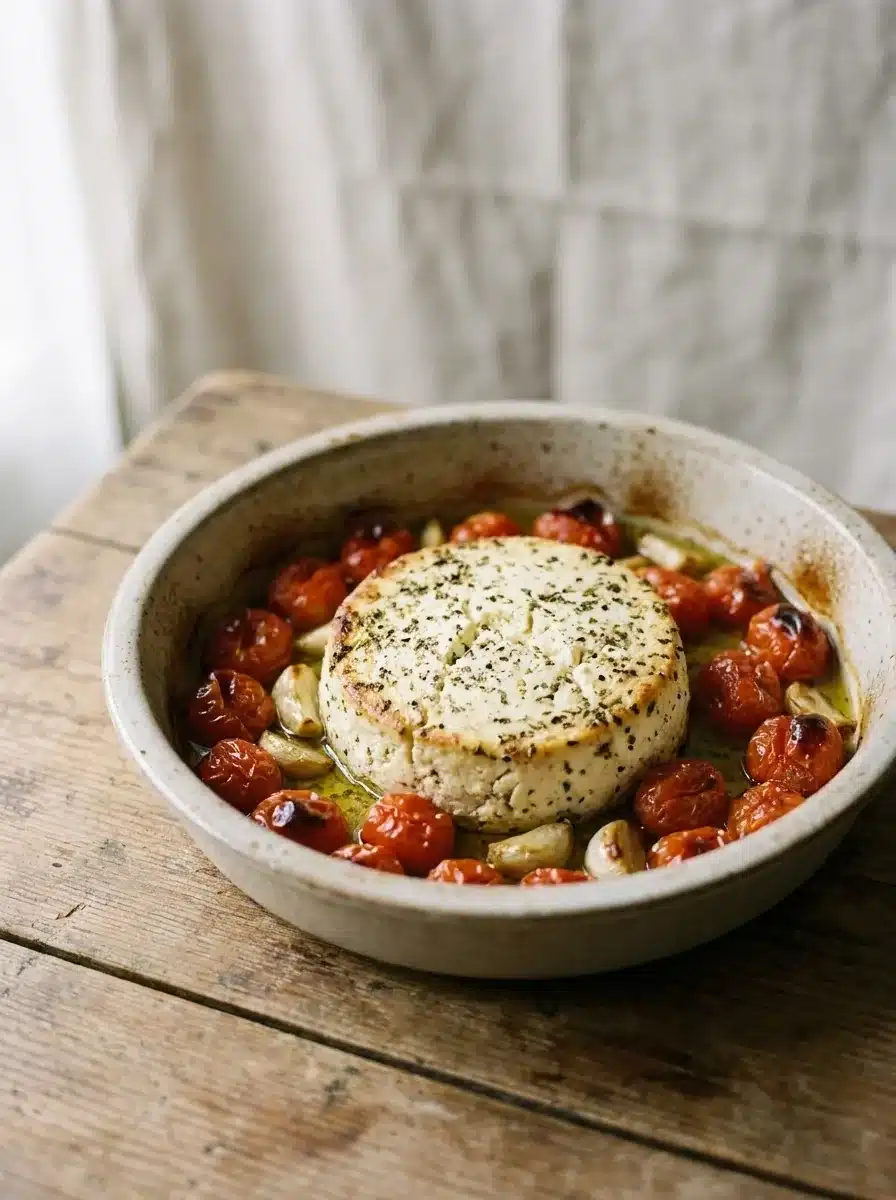
- Put the block of cheese in the centre of the dish and tip the tomatoes and the whole garlic cloves around it. Leaving the cheese unwrapped and whole matters: a block melts from the outside in and keeps its shape long enough for the tomatoes to finish cooking.
- Pour over the olive oil, then scatter the sea salt, black pepper, oregano and chilli flakes, if using. Shake the dish so the tomatoes roll and coat themselves rather than stirring with a spoon, which pushes the seasoning off the cheese.
- Roast for 22 to 25 minutes, until the tomato skins have split and there is a clear reddish liquid in the bottom of the dish. A few blackened patches on the tomatoes are what you want; that is concentrated sugar, not burning.
- While the dish is in the oven, bring a large pan of water to a rolling boil and add the tablespoon of fine salt. Cook the pasta for one minute less than the packet says, so it is still firm in the centre.
- Before draining, scoop out at least 250 ml of the cooking water and set it aside. This is the single step people forget, and there is no way to make it up afterwards: plain water will not thicken the sauce.
- Take the dish out of the oven and crush the cheese, the garlic cloves and about half the tomatoes with the back of a fork, working the roasting juices in as you go. Leave the rest of the tomatoes whole so there is something to bite into.
- Tip the drained pasta straight into the hot dish and add 120 ml of the reserved water. Stir hard for 30 to 60 seconds. The sauce will look thin at first and then suddenly tighten and cling to the pasta; keep going until it does.
- Add more cooking water a tablespoon at a time if it stiffens, and taste for salt. Depending on the cheese and the Parmesan it may need none at all.
- Tear in the basil off the heat, add the lemon zest and the Parmesan if using, and serve straight from the dish. The sauce is at its best in the first few minutes, before the pasta starts to drink it up.
Recipe Variations
With greens. Stir two large handfuls of baby spinach into the hot dish before the pasta goes in; it wilts in the residual heat. Tenderstem broccoli works too, boiled in the pasta water for the last three minutes.
With prawns. Scatter 250 g of raw peeled prawns over the tomatoes for the final five minutes of roasting. They turn opaque in exactly that time and leave their juices in the dish.
Spicy nduja version. Dot two tablespoons of nduja around the cheese at the start. It renders into the oil and turns the sauce deep orange and noticeably hotter.
Roasted red pepper. Add one jarred red pepper, torn into strips, alongside the tomatoes. It makes the sauce sweeter and gives it more body.
Gluten-free. Corn and rice pasta releases less starch, so reserve 350 ml of water and expect to use most of it. Stir for a full minute rather than thirty seconds.
Baked finish. Mix everything, top with 60 g of grated mozzarella and return the dish to the oven for eight minutes for a lightly browned crust.
Serving Ideas
This is filling enough to be a meal on its own, so what goes beside it should be sharp rather than substantial. A green salad with a mustard vinaigrette, dressed at the last moment, is the right weight. So is a plate of rocket with lemon and a little olive oil.
Bread earns its place here more than usual, because there is always sauce left in the dish. A piece of focaccia or a torn baguette does the job; garlic bread is one garlic note too many.
If you are serving it as a first course rather than a main, halve the pasta and keep the quantity of tomatoes and cheese the same. The result is saucier, richer and suited to a smaller bowl, and six people will eat from it comfortably.
For something to drink, a chilled light red such as a Barbera or a dry rose matches the acidity of the roasted tomatoes better than a heavy wine would.
Keeping It Fresh
Leftovers keep in an airtight container in the fridge for up to three days. The pasta will absorb most of the sauce overnight and look dry by morning, which is normal rather than a sign that anything has gone wrong.
Reheat in a frying pan over a medium heat with two or three tablespoons of water or milk per portion, stirring until the sauce loosens again. The microwave works at half power in short bursts, stirring between each, but it tends to make the cheese grainy if pushed.
Freezing is not worth it. The emulsion breaks on thawing and the pasta turns soft, and there is no amount of stirring that brings it back.
If you want to get ahead, roast the cheese and tomatoes earlier in the day and leave the dish at room temperature. Warm it for eight minutes at 180 °C while the pasta boils, then carry on from the crushing step as written.
Reader Questions Answered
Can I use a different soft cheese?
Yes, as long as it is a spreadable cheese sold in a block rather than a tub. Garlic and herb cream cheese works, and so does a mild goat cheese log, though the goat cheese is tangier and you will want a pinch of sugar with the tomatoes. Avoid low-fat spreads: they split instead of melting.
Why has my sauce gone grainy?
Almost always because the pasta water ran out and the dish was left standing too long. Add two tablespoons of hot cooking water and stir firmly; the starch pulls the fat back in. A sauce that was mixed in a cold dish will do the same thing, so work in the hot roasting dish, not a serving bowl.
Can I use tinned tomatoes instead?
Not for this method. Tinned tomatoes are already wet, so they steam the cheese rather than roasting with it and you lose the concentrated flavour. If fresh cherry tomatoes are out of season, use the small ones sold on the vine, or halve larger tomatoes and roast them cut side up for 30 minutes.
How do I scale it up for six or eight?
Double everything but use two dishes rather than one large one. Crowding the tomatoes into a deep layer means the ones underneath steam, the juices never reduce, and the sauce ends up watery. Two dishes roast in the same 25 minutes.
Is the whole garlic not overpowering?
No. Whole peeled cloves roasted in oil turn sweet and soft and lose their raw bite completely, which is why they are crushed into the sauce rather than chopped in at the start. If you want a sharper garlic note, grate one raw clove in at the very end.
Wrapping Up
One dish, one pan of water, and the oven doing the work unattended for twenty-five minutes. Nothing here needs watching and nothing can really go wrong, provided you keep back a mug of that cloudy cooking water before the pasta hits the colander.
It is worth making once exactly as written, so you see the moment the sauce turns from thin and separated to glossy and clinging. After that the variations more or less suggest themselves, and it becomes the sort of recipe you cook without reading.
Related recipes: Classic Apple Pie with a Lattice Crust, Overnight French Toast Bake with Cinnamon, Italian Pasta Salad with Mozzarella and Olives, Air Fryer Salmon with Lemon and Garlic Butter, Buffalo Chicken Dip with Melted Cheese.
Learn more: Tomatoes on Wikipedia · food storage & safety (FoodSafety.gov).
◆ ◆ ◆
← Back to Boursin Pasta with Roasted Cherry TomatoesGet new recipes
One tasty homemade recipe in your inbox each week. No spam, unsubscribe anytime.
Comments (9)