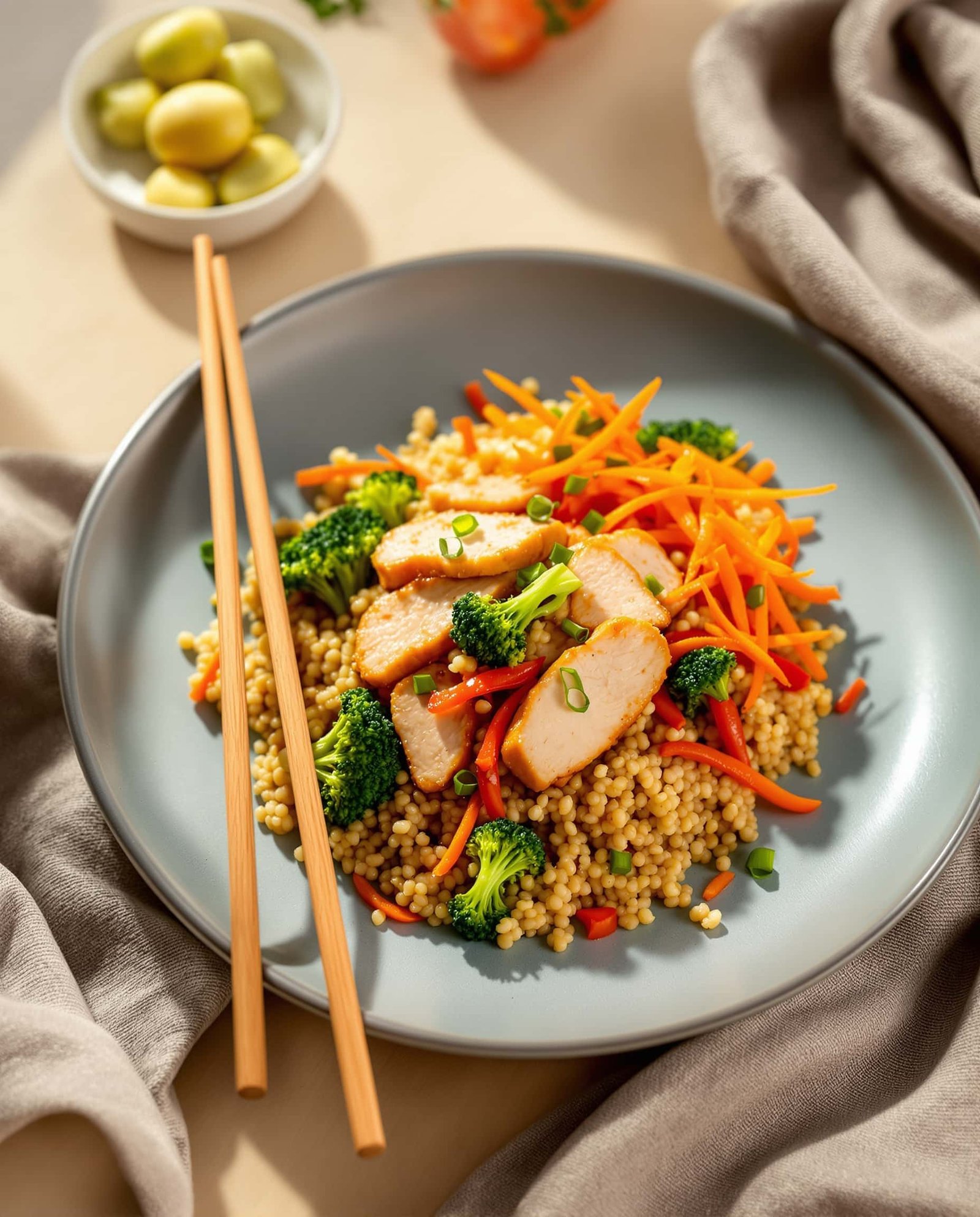
Let’s be honest, the world of weight loss can feel like a minefield of conflicting advice and fad diets. But what if the secret wasn’t about what you *can’t* eat, but how you *do* eat? That’s where the ancient Japanese principle of Hara Hachi Bu comes in – eating until you’re 80% full. It’s not about deprivation, but about understanding your body’s signals. This hara hachi bu meal recipe is designed to help you practice that mindful approach, offering a delicious, satisfying, and visually appealing dish that encourages you to stop before you’re stuffed. No gimmicks, just good food and a smarter way to eat.
| Prep Time | 15 minutes | Cook Time | 20 minutes |
| Servings | 1 | Calories | 385 kcal |
Ingredients
- 100g (approx. 3.5 oz) boneless, skinless chicken breast, thinly sliced
- 1 tbsp low-sodium soy sauce
- 1 tsp rice vinegar
- 1/2 tsp grated fresh ginger
- 1/4 tsp garlic powder
- 1 tsp sesame oil, divided
- 80g (approx. 2.8 oz) fresh broccoli florets
- 50g (approx. 1.7 oz) red bell pepper, thinly sliced
- 50g (approx. 1.7 oz) carrots, julienned
- 75g (approx. 2.6 oz) cooked quinoa
- petite natural food coloring (1 tsp)
- Pinch of red pepper flakes (optional, for a little kick)
- Fresh cilantro, chopped (for garnish)
Recommended Tools You’ll Need
| Tool | Why You Need It |
|---|---|
| Small Non-Stick Skillet | Ensures even cooking for the chicken and vegetables with minimal oil. |
| Steamer Basket | Perfect for gently cooking vegetables to retain nutrients and a crisp texture. |
| Sharp Chef’s Knife | Essential for precise slicing and dicing, making prep quicker and safer. |
| Digital Kitchen Scale | Crucial for accurate portion control, especially when practicing Hara Hachi Bu. |
Calorie Reality
At 385 calories, this meal is a fantastic component of a typical 1500-2000 kcal daily budget. It provides a significant portion of your energy needs for one meal, allowing room for two other balanced meals and perhaps a small, nutrient-dense snack without feeling deprived. It’s designed to be satisfying, not just ‘low-calorie.’
About Your Daily Budget: Your Total Daily Energy Expenditure (TDEE) is the total number of calories your body burns in a day. To lose weight, you need to consistently consume fewer calories than your TDEE, creating a calorie deficit.
Diet Compatibility
Compatible with: Mediterranean Diet (with minor adjustments), Flexitarian, Gluten-Free (ensure soy sauce is GF), Pescetarian (substitute chicken with fish)
Not compatible with: Ketogenic Diet, Paleo Diet (due to quinoa and soy sauce), Vegan, Vegetarian
Warning: Mixing Diets: Mixing and matching elements from drastically different diet approaches can be counterproductive and, frankly, dangerous to your health. For example, trying to be ‘keto’ by just eating more fat while still consuming high carbs can lead to lipogenesis (fat storage) and metabolic confusion rather than the desired fat-burning state of ketosis. Each dietary framework has specific biochemical pathways it aims to optimize. Randomly combining them can disrupt your body’s natural processes, making weight loss harder and potentially causing nutrient imbalances or other health issues. Stick to one well-researched approach if you’re serious about your goals.
Expert Tips
To truly benefit from this Hara Hachi Bu meal, slow down your eating. Put your fork down between bites, chew thoroughly, and pay attention to your body’s signals of fullness. It takes your brain about 20 minutes to register satiety. Consider using smaller plates – a ‘petite assiette élégante’ as described – to make the portion look more substantial. This psychological trick can help you feel more satisfied with less. For weight loss, consistency is key, so make mindful eating a regular practice, not just a one-off.
Macros Breakdown
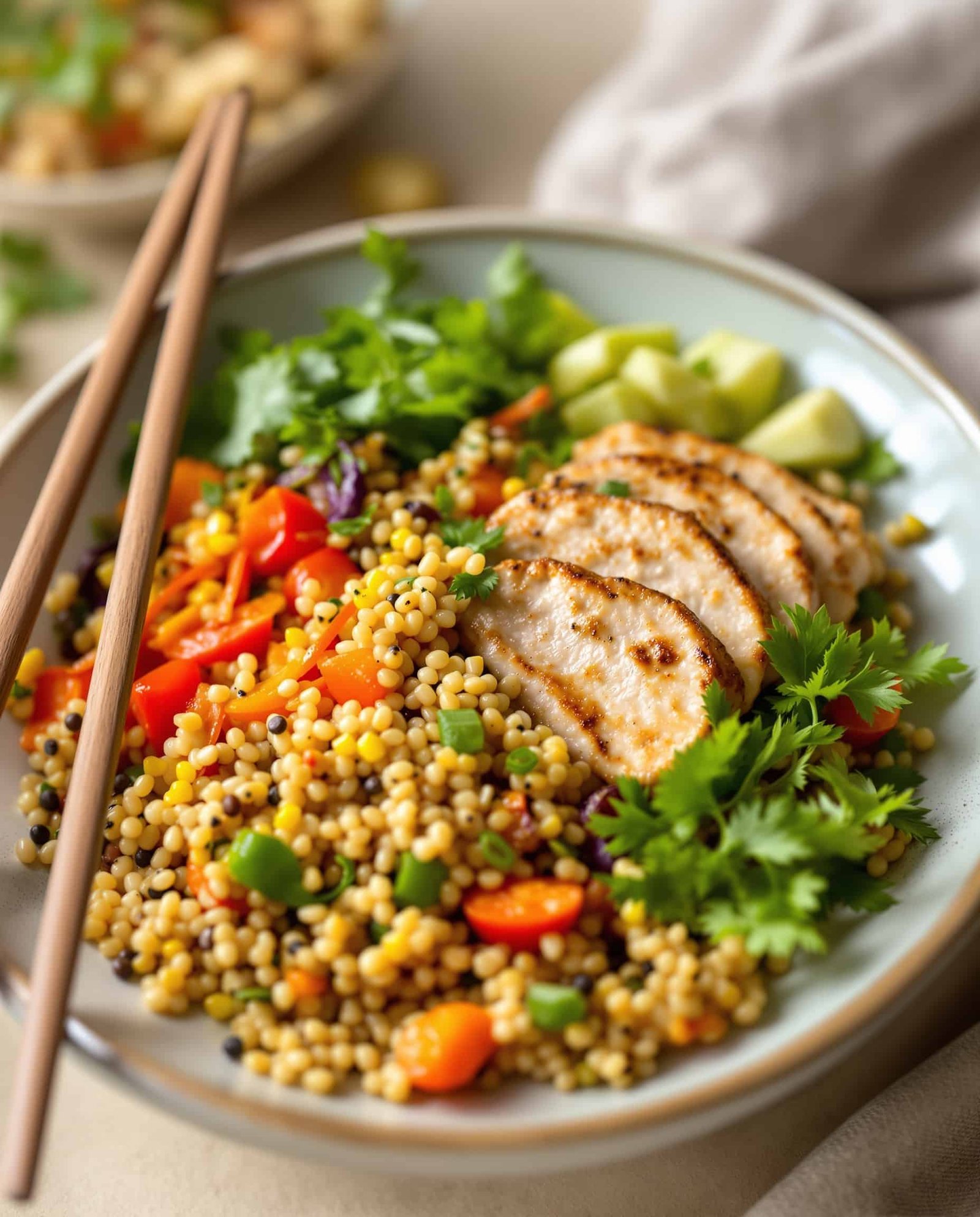
This meal offers a balanced macronutrient profile, ideal for satiety and sustained energy. The high protein content (35g) is crucial for muscle maintenance and keeps you feeling full longer. Complex carbohydrates from quinoa and vegetables provide steady energy, while healthy fats from sesame oil contribute to flavor and nutrient absorption, preventing sugar crashes. Fiber aids digestion and further enhances fullness.
Nutrition Information (per serving)
| Calories | Protein | Carbs | Fat | Fiber |
|---|---|---|---|---|
| 385 kcal | 35g | 38g | 12g | 6g |