Mastering Fruit Jelly with Agar and Gelatin
↓ Jump to Recipe
Learn the essential differences between agar and gelatin to create the perfect fruit jelly dessert for any dietary need or timeline.
Stepping into the world of confectionery science can feel a bit intimidating at first, yet the fundamental task of transforming liquids into structured sweets is a foundational skill every home cook should possess. Whether you are aiming for a classic, melt-in-your-mouth dessert or a firm, modern treat, the choice between gelling agents is your most important decision.
This guide explores the distinct personalities of agar and gelatin, two primary ingredients that act as the backbone for countless recipes. By comparing their unique setting requirements and textural results, you will gain the confidence to adapt almost any jelly recipe to suit your kitchen pantry or your guests' specific dietary preferences.
I have found that understanding the mechanics behind these two agents changes how you approach dessert. Once you grasp how each behaves during the heating and cooling process, you can pivot between them effortlessly, ensuring your final dish is always a success. Let us dive into the mechanics and the practical application of these kitchen essentials.
Table of Contents
Understanding Gelling Agent Mechanics
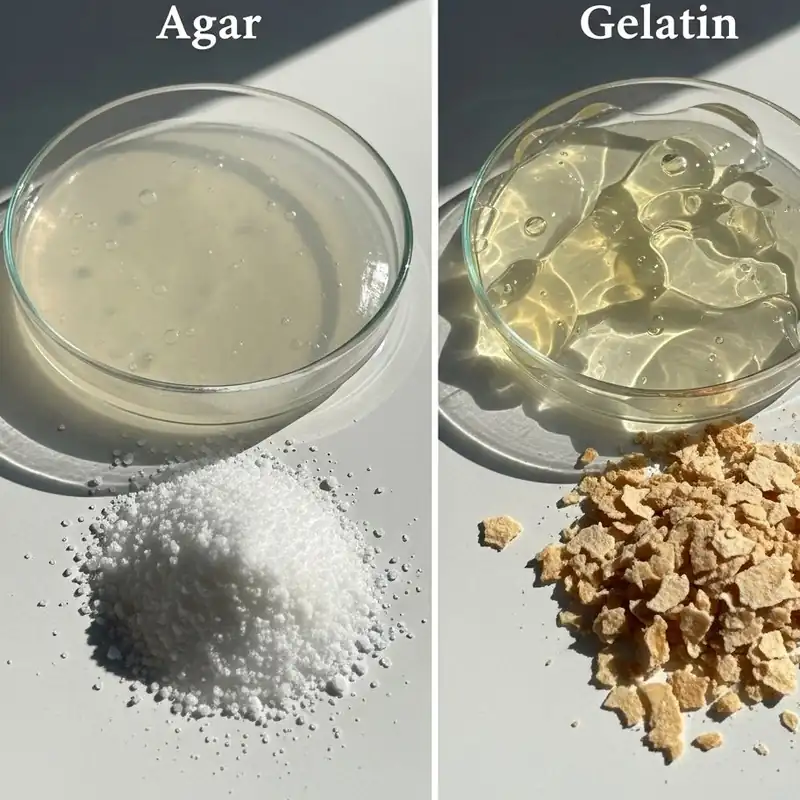
The primary distinction between these two options is their source and their behavior under thermal stress. Gelatin, which has long been the standard in home kitchens, is a protein sourced from animal tissues. It creates a tender, elastic structure that dissolves almost instantly upon hitting your tongue. It requires refrigeration to form its bonds and remains delicate throughout the process.
In contrast, agar is derived from red seaweed, making it a powerful plant-based alternative. It produces a much more rigid, brittle structure that can withstand higher temperatures without losing its shape. This unique quality allows agar to set effectively even in warmer environments, which is a massive advantage when serving desserts outdoors or in humid conditions.
Selecting the Right Component
Choosing between these agents often comes down to the desired mouthfeel. If you are looking for that nostalgic, soft bounce, gelatin is the undisputed champion. It offers a luxurious, smooth finish that pairs perfectly with dairy-based desserts or delicate fruit mousses. However, keep in mind that it does not hold its integrity well if left at room temperature for extended periods.
Agar is your best choice when you need a clean, snap-like texture. Because it sets firmly, it is the ideal candidate for fruit-heavy jellies or intricate molded shapes where detail is paramount. It provides a crisp bite that is distinct from the creamier, more yielding quality of gelatin-based recipes. Both are wonderful tools, and having both in your pantry ensures you are prepared for any dessert emergency.
Ingredients You Will Need
- Two cups of fruit juice, such as apple or grape
- One quarter cup of granulated sugar
- One teaspoon of agar powder OR two teaspoons of gelatin powder
- One tablespoon of lemon juice
Step-by-Step Instructions
- Place the fruit juice and the sugar into a small saucepan.
- Warm the liquid over medium heat while whisking until the sugar has fully dissolved.
- Add the agar powder to the warm juice and stir vigorously if you are using the plant-based option.
- Bring the juice mixture to a full boil to activate the agar.
- Lower the heat and let the mixture simmer gently for three minutes.
- Sprinkle the gelatin powder over one quarter cup of cold water in a small bowl if you are using the animal-based option.
- Allow the gelatin to sit for five minutes until it appears thick and spongy.
- Remove the juice mixture from the heat once it is warm but not boiling if using gelatin.
- Stir the bloomed gelatin into the warm juice until the mixture is completely smooth.
- Mix in the lemon juice to brighten the flavor profile.
- Pour the liquid into your chosen molds or a small glass dish.
- Place the molds into the refrigerator until the jelly is completely firm.
- Submerge the bottom of the mold in warm water for a few seconds to loosen the edges.
- Turn the jelly out onto a serving plate and enjoy.
Mastering Fruit Jelly with Agar and Gelatin
Learn the essential differences between agar and gelatin to create the perfect fruit jelly dessert for any dietary need or timeline.
Ingredients
Instructions
- Place the fruit juice and the sugar into a small saucepan .
- Warm the liquid over medium heat while whisking until the sugar has fully dissolved.
- Add the agar powder to the warm juice and stir vigorously if you are using the plant-based option.
- Bring the juice mixture to a full boil to activate the agar.
- Lower the heat and let the mixture simmer gently for three minutes.
- Sprinkle the gelatin powder over one quarter cup of cold water in a small bowl if you are using the animal-based option.
- Allow the gelatin to sit for five minutes until it appears thick and spongy.
- Remove the juice mixture from the heat once it is warm but not boiling if using gelatin.
- Stir the bloomed gelatin into the warm juice until the mixture is completely smooth.
- Mix in the lemon juice to brighten the flavor profile.
- Pour the liquid into your chosen molds or a small glass dish.
- Place the molds into the refrigerator until the jelly is completely firm.
- Submerge the bottom of the mold in warm water for a few seconds to loosen the edges.
- Turn the jelly out onto a serving plate and enjoy.