Instructions
- Prepare sushi rice according to package instructions and let cool slightly.
- In a bowl, gently mix the cubed tuna with soy sauce, sesame oil, rice vinegar, and grated ginger.
- Divide the cooked sushi rice between two bowls.
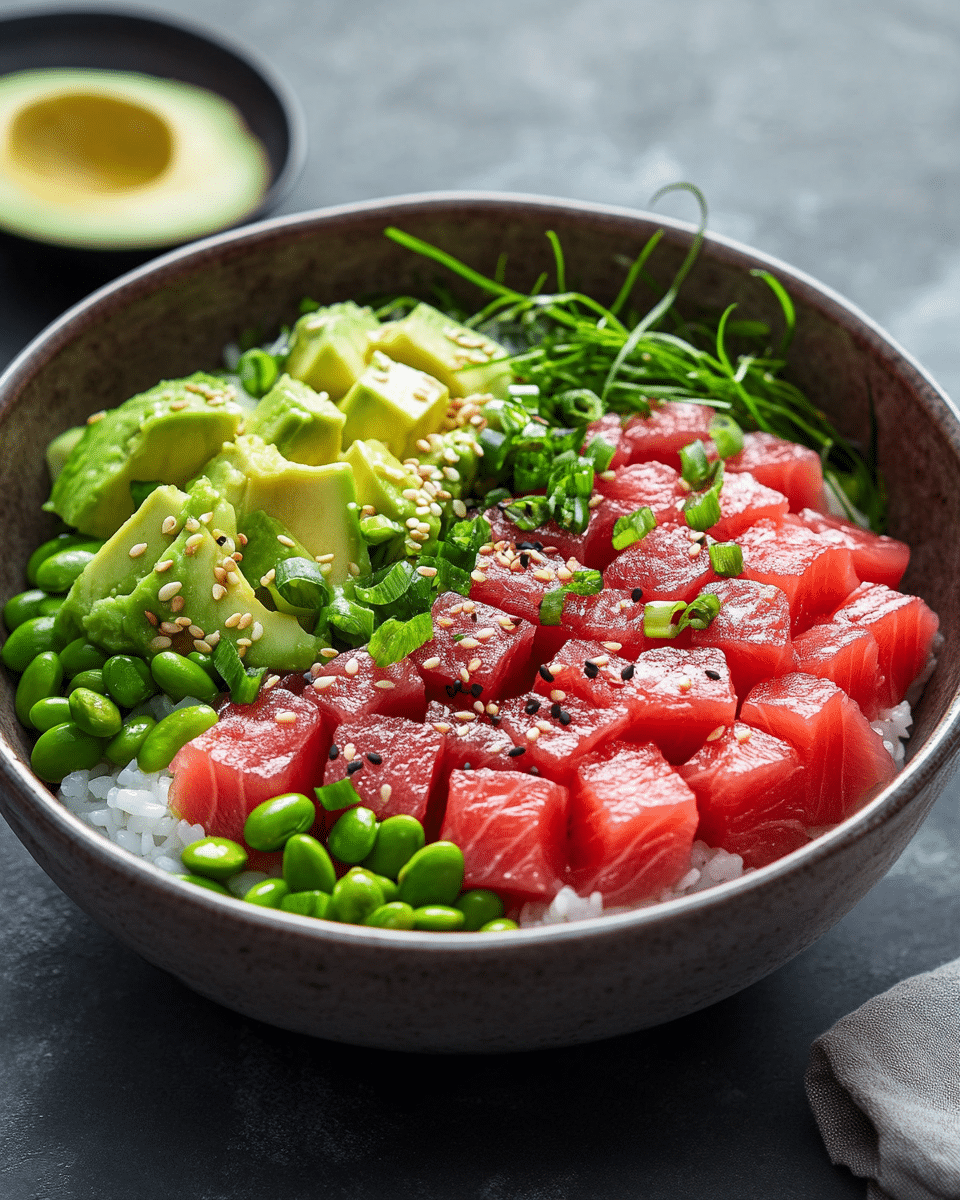
- Top the rice with the marinated tuna, sliced avocado, edamame, and seaweed salad.
- Sprinkle with sesame seeds and add any optional toppings you like.
- Serve immediately and enjoy!
Key Terms Explained
| Term | Explanation | Why it matters here |
|---|---|---|
| Macronutrients | Macronutrients are the nutrients your body needs in large amounts: protein, carbs, and fats. They provide energy and support various bodily functions. | This recipe provides a balanced mix of all three macronutrients. |
| Calorie Deficit | A calorie deficit means you’re burning more calories than you consume. This leads your body to use stored fat for energy, resulting in weight loss. | Managing portion sizes and overall calorie intake helps create a deficit. |
| Lipogenesis | Lipogenesis is the metabolic process where your body converts excess carbohydrates (and sometimes protein) into fatty acids, which are then stored as fat. | Overeating any macronutrient, even from healthy foods, can lead to fat storage. |
| TDEE | TDEE stands for Total Daily Energy Expenditure. It’s the number of calories your body burns in a day, considering activity levels and other factors. | Knowing your TDEE helps you determine how many calories you need to eat to lose, maintain, or gain weight. |
The Truth About This Recipe
The Truth About This Recipe: This poke bowl is a healthy and delicious meal. However, it’s not a magic weight-loss bullet. Weight loss depends on creating a consistent calorie deficit over time. Don’t expect overnight results, and be wary of anyone who promises that. Focus on sustainable habits, and enjoy this poke bowl as part of a balanced diet!
Move Your Body
Enjoy your poke bowl, then take a brisk 20-minute walk! That can burn around 100 calories, contributing to your daily movement goals. Small steps add up!
Delicious Variations
For a keto version, swap the rice for cauliflower rice and use tamari instead of soy sauce. For a low-carb option, reduce the amount of rice and add more vegetables. A Mediterranean twist could include olives, cucumbers, and a lemon-herb dressing instead of sesame oil.
Healthier Alternatives
Use brown rice instead of white rice for more fiber and nutrients. Swap regular soy sauce for low-sodium soy sauce to reduce sodium intake. Add more vegetables like cucumber or carrots for added vitamins and minerals. Use baked tofu instead of tuna for a vegetarian option.
Serving Suggestions
Enjoy this poke bowl as a light lunch or dinner. Avoid pairing it with sugary drinks or processed snacks, as this can lead to an unhealthy blood sugar spike. A side of miso soup would be a great addition, but skip the fried tempura!
Storage Instructions
Store leftover poke bowl in an airtight container in the refrigerator for up to 24 hours. It’s best to consume the tuna as soon as possible for optimal freshness and safety. The rice may become slightly firm when refrigerated.
Frequently Asked Questions
Is poke healthy for weight loss?
Yes, poke can be part of a healthy weight loss plan, especially when made with lean protein, whole grains, and lots of vegetables. Be mindful of portion sizes and high-calorie sauces.
Can I use frozen tuna?
Yes, you can use frozen sushi-grade tuna. Make sure to thaw it properly in the refrigerator before using.
How long does poke last in the fridge?
It’s best to consume poke within 24 hours of making it, especially if it contains raw fish.
How can I make this poke bowl lower in calories?
Reduce the amount of rice, use light soy sauce, and load up on vegetables. Skip the high-calorie sauces like sriracha mayo.
Is sushi rice necessary for poke?
While sushi rice adds a traditional flavor and texture, you can use other types of rice like brown rice or quinoa for a healthier alternative.
Conclusion
This poke bowl recipe is a simple and satisfying way to enjoy a healthy and flavorful meal. Remember, sustainable healthy eating is about finding balance and enjoying what you eat. Don’t get caught up in restrictive dieting or unrealistic expectations. Focus on making healthy choices most of the time, and enjoy your favorite foods in moderation. You’ve got this!