Instructions
- In a medium saucepan, combine rolled oats, almond milk, mashed banana, chia seeds, turmeric, ginger, and black pepper. Stir well.
- Bring the mixture to a gentle boil over medium heat, then reduce heat to low and simmer for 10-15 minutes, stirring occasionally, until the oats are cooked and the porridge has thickened to your desired consistency.
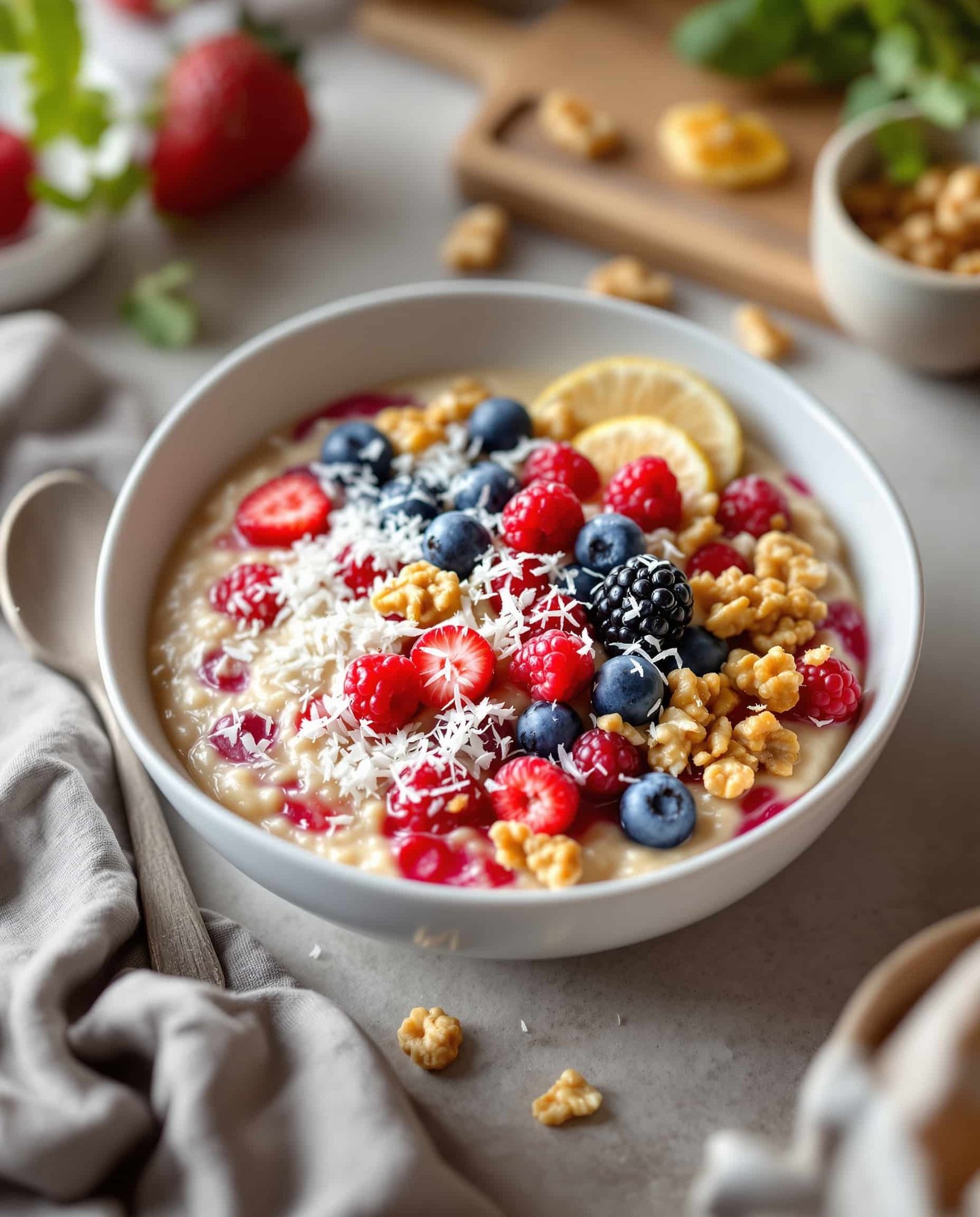
- Stir in the multicolore natural food coloring until evenly distributed, creating a vibrant, colorful porridge.
- Divide the porridge between two bowls.
- Top each serving with mixed berries, shredded coconut, and chopped walnuts.
- Serve warm and enjoy your gut-loving meal.
Key Terms Explained
| Term | Explanation | Why it matters here |
|---|---|---|
| Microbiome | The trillions of microorganisms (bacteria, fungi, viruses) living in your gut, playing a crucial role in digestion, immunity, and overall health. | The fiber in this recipe feeds beneficial gut bacteria, promoting a diverse and healthy microbiome. |
| Prebiotics | Non-digestible fibers that act as food for beneficial gut bacteria, helping them to thrive. | Oats, bananas, and chia seeds are excellent sources of prebiotics, supporting your gut’s ecosystem. |
| Inflammation | Your body’s natural response to injury or infection, but chronic inflammation can contribute to various health issues, including gut problems. | Turmeric and ginger in this recipe are known for their anti-inflammatory properties, which can soothe an irritated gut. |
| Satiety | The feeling of fullness and satisfaction after eating, which helps control appetite and prevent overeating. | The fiber, protein, and healthy fats in this porridge enhance satiety, making it easier to stick to your calorie goals. |
The Truth About This Recipe
The Truth About This Recipe: While this gut healing recipe is packed with nutrients that support digestive health, it won’t magically melt away pounds. Weight loss, at its core, comes down to a consistent calorie deficit. This porridge is a tool to help you feel satisfied, nourished, and less prone to cravings, making that deficit more achievable. It’s about empowering your body from the inside out, not offering a quick fix. Sustainable weight loss is a journey of consistent, informed choices, and this recipe is a step in the right direction.
Move Your Body
Remember, nutrition is half the equation. A brisk 30-minute walk could help burn around 150-200 calories, putting a dent in the calories from this porridge and contributing to your overall calorie deficit. Find movement you enjoy; it doesn’t have to be a gym grind.
Delicious Variations
For a Mediterranean twist, swap walnuts for pistachios and add a drizzle of extra virgin olive oil after cooking. If you’re looking for a lower-carb option (though this recipe isn’t truly low-carb), you could reduce the banana and use a smaller portion of oats, perhaps adding more chia seeds or flax seeds for texture. For a more protein-rich version, stir in a scoop of unflavored plant-based protein powder after cooking, or serve with a side of hard-boiled eggs for those not adhering to a vegan diet.
Healthier Alternatives
To reduce calories further, use water instead of almond milk, which will save about 30-50 calories per serving, though it will be less creamy. You can also reduce the shredded coconut and walnuts by half, saving around 50 calories per serving while still getting some healthy fats and crunch. Choosing fresh berries over dried fruit is always a good idea, as dried fruits often concentrate sugars and calories. The ‘why’ here is simple: every small reduction in calorie-dense ingredients, without sacrificing nutrition, adds up over time.
Serving Suggestions
This porridge is a complete meal on its own, perfect for breakfast or a light lunch. Be mindful of adding extra sweeteners like maple syrup or honey, as these can quickly add unnecessary calories. If you feel the need for more sweetness, try a few drops of stevia or a small handful of extra berries. Avoid pairing this with sugary drinks or pastries, as that would counteract the gut-friendly benefits and calorie goals. Think of this as a foundational meal; complement it with other whole, unprocessed foods throughout your day.
Storage Instructions
Leftover porridge can be stored in an airtight container in the refrigerator for up to 3-4 days. It will thicken considerably upon cooling, so you may need to add a splash of almond milk or water when reheating. Reheat gently on the stovetop over low heat, stirring frequently, or in the microwave in 30-second intervals until warmed through. This recipe is great for meal prepping, making healthy eating convenient even on busy mornings.
Frequently Asked Questions
Can this gut healing recipe help me lose weight quickly?
No ‘gut healing recipe’ can guarantee quick weight loss. This recipe supports gut health, which is vital for metabolism and overall well-being. Weight loss is a result of a consistent calorie deficit and a balanced diet over time, not a single food.
How often should I eat this porridge for gut health?
Incorporating this porridge 3-4 times a week, or even daily if you enjoy it, can be beneficial. Consistency in feeding your gut good fiber and nutrients is more important than sporadic efforts. Listen to your body and how it feels.
Is multicolore natural food coloring safe?
Yes, natural food colorings are typically derived from plant sources like spirulina, beet, or turmeric, making them a safe way to add a fun visual element without artificial dyes. Always check the ingredient list of your specific product.
Will this recipe cause bloating due to fiber?
If you’re not used to a high-fiber diet, you might experience some initial bloating. It’s best to increase fiber intake gradually. Ensure you’re also drinking plenty of water, as fiber needs water to move smoothly through your digestive system.
I’m not a doctor, but what’s your take on probiotics vs. prebiotics?
As someone who reads the science, prebiotics (like the fiber in this recipe) feed the good bacteria already in your gut, helping them multiply. Probiotics are live bacteria you ingest. Both can be beneficial, but for most people, a diet rich in prebiotics is a fantastic starting point for gut health. Always consult your doctor or a registered dietitian before starting new supplements.
Conclusion
Taking care of your gut is one of the most powerful things you can do for your overall health, including your weight management journey. This gut healing recipe isn’t about deprivation or complex rules; it’s about nourishing your body with simple, whole foods. Remember, sustainable weight loss is about understanding your body, making informed choices, and being patient with the process. There are no shortcuts, only consistent effort and smart eating. Be kind to yourself, enjoy this delicious and beneficial meal, and take pride in each step you take towards a healthier, happier you.