Refreshing Buko Pandan Jelly Dessert Philippines Style
↓ Jump to Recipe
Enjoy the classic taste of a chilled jelly dessert Philippines style. This creamy, refreshing Buko Pandan treat features coconut and pandan.
When we talk about a beloved jelly dessert Philippines fans crave, nothing beats the creamy charm of Buko Pandan. This traditional treat highlights the aromatic scent of pandan leaves paired with the sweetness of tender young coconut. It is the ultimate cooling dessert that brings back warm memories of family gatherings. Whether you are searching for a simple gelatin recipe Philippines style or looking to impress guests, this recipe is a crowd-pleaser. Let us dive into making this iconic, silky delight right in your own home kitchen.
Table of Contents
Table of Contents
Ingredients
- 1 pack (10g) green gulaman powder (unflavored or pandan-flavored)
- 4 cups (950 ml) water
- 1/2 cup (100g) white granulated sugar
- 2 cups (450g) young coconut strips (buko), fresh or canned
- 1 can (370 ml) evaporated milk
- 1 cup (240 ml) sweetened condensed milk
- 1/2 cup (120 ml) all-purpose cream, chilled
- 1 cup (150g) cooked small green sago pearls
- 1 teaspoon pandan extract (if using unflavored gulaman)
- Pinch of salt
- Ice cubes for chilling
Creating this refreshing jelly dessert requires fresh, quality components. The contrast between the firm gulaman cubes and the creamy sauce is what defines the texture.
Essential Kitchen Tools
| Tool | Purpose |
| Mixing Bowls | Combining the cream base |
| Saucepan | Boiling the gulaman |
| Glass Container | Setting the gelatin |
| Wire Whisk | Ensuring a smooth cream |
Why This Recipe Works
The Science of Texture and Flavor Balance
This recipe achieves a sophisticated balance by marrying the aromatic, grassy notes of pandan with the velvet richness of coconut cream. The secret lies in the use of dehydrated seaweed-based gelling agent, locally known as gulaman. Unlike animal-derived gelatin, gulaman creates a firmer, more resilient structure that remains stable at room temperature. This is crucial for tropical climates where standard gelatin might weep or lose integrity. By utilizing a precise ratio of 10 grams of powder to 500 milliliters of liquid, you create a crystalline structure that is firm enough to be cubed yet tender enough to yield easily under a spoon.
The interaction between the coconut fat and the gelling agent is governed by the cooling process. As the mixture drops below 40 degrees Celsius, the polymer chains begin to trap the liquid, creating a semi-rigid matrix. Because we incorporate both coconut milk for body and a touch of cream for mouthfeel, the resulting texture is luxurious but clean on the palate. The pandan extract acts as the bridge between these layers, providing a floral aroma that cuts through the richness of the fats. When the cubes are finally submerged in the chilled dairy base, they absorb the temperature differential, becoming incredibly refreshing. This specific method ensures the cubes do not turn gummy or rubbery, maintaining a sharp, clean-cut edge that makes for an aesthetically pleasing presentation, while the contrast between the firm pandan jelly and the smooth, creamy liquid ensures each bite is texturally dynamic and deeply satisfying.
Pro Tips for Better Results
Mastering the Technique for Professional Quality
- Proper Hydration: Always bloom your gulaman powder in room temperature water for at least five minutes before applying heat. This prevents the formation of tiny, undissolved lumps that create an inconsistent texture throughout your dessert.
- Temperature Control: Heat the mixture slowly until it reaches a gentle simmer, approximately 95 degrees Celsius. Never let it boil vigorously for too long, as excessive evaporation can alter the final concentration, resulting in a rubbery consistency rather than a delicate snap.
- Constant Agitation: Stir continuously using a flat-bottomed whisk or spatula. Sugar and gelling agents tend to gravitate toward the base of the pan; failing to stir results in scorched sediment that ruins the clarity and clean flavor of the jelly.
- Setting Dynamics: Allow the mixture to cool to room temperature before transferring it to the refrigerator. Placing a boiling hot pan directly into a cold environment creates condensation, which can ruin the surface tension of the setting jelly.
- The Chilling Ritual: For the ultimate dining experience, chill your glass serving coupes for at least two hours before assembly. This prevents the cold coconut base from warming up immediately upon contact with the glassware, keeping the dessert refreshing for the duration of the meal.
- Cutting Precision: Use a sharp, thin-bladed knife to cut the jelly. Wipe the blade with a warm, damp cloth between each slice to ensure the edges remain smooth and transparent, showcasing the vibrant green hue of the pandan without any jagged, unsightly tearing.
Nutrition Facts (per serving)
| Calories | 210 kcal |
| Total Fat | 9g |
| Sugars | 28g |
Figures are estimates; you can check individual ingredients in USDA FoodData Central.
Instructions
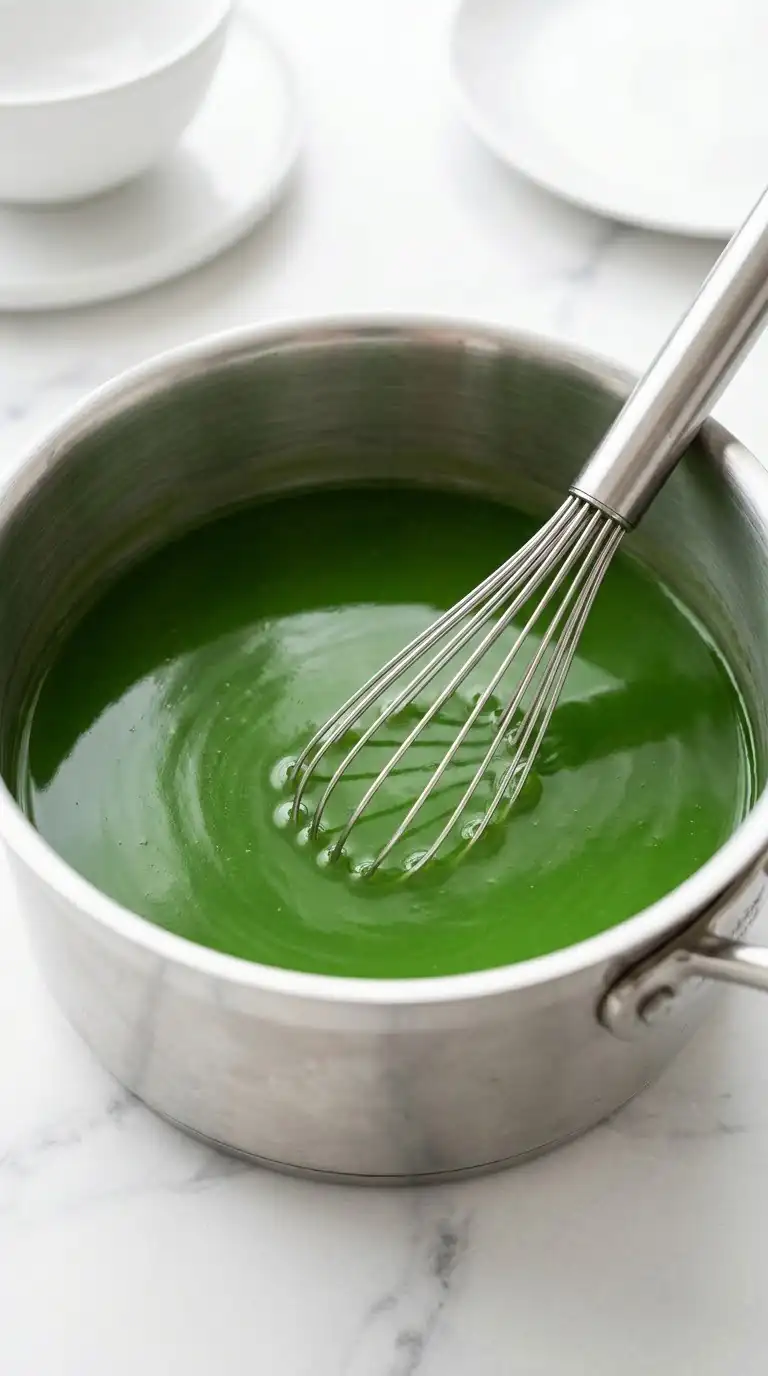
- Combine the gulaman powder, water, and sugar in a saucepan, stirring continuously until the mixture is fully dissolved to prevent clumping.
- Bring the mixture to a gentle boil over medium heat, stirring constantly to ensure the gelatin is properly activated and smooth.
- Add the pandan extract if you are using unflavored gulaman, stirring well to achieve a vibrant green hue and signature aroma.
- Pour the mixture into a shallow glass container and allow it to cool at room temperature before chilling in the refrigerator for at least two hours.
- Once the jelly is firm, slice it into uniform 1-inch cubes using a sharp knife to create the classic jelly dessert look.
- In a large mixing bowl, combine the evaporated milk, condensed milk, all-purpose cream, and a small pinch of salt, whisking until the base is perfectly smooth.
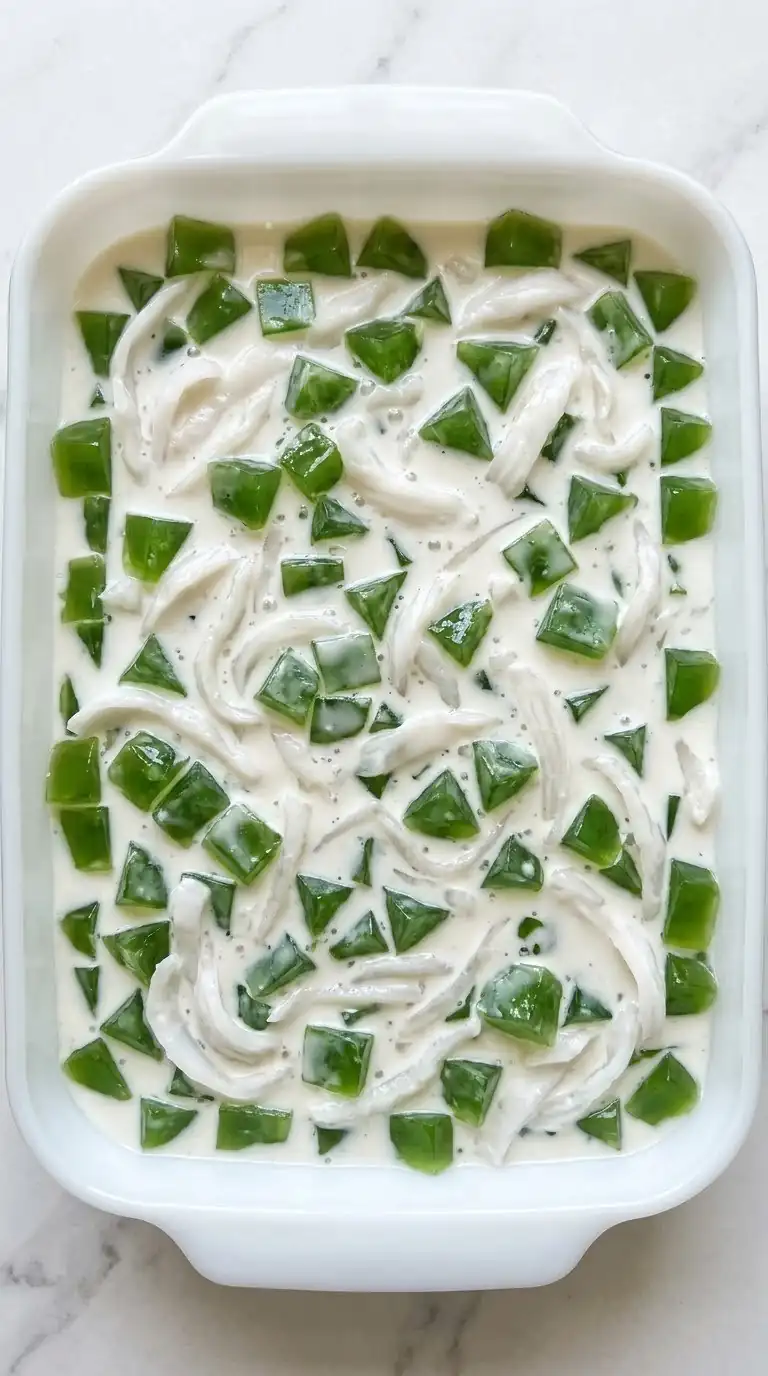
- Fold in the prepared green gulaman cubes, the shredded young coconut, and the cooked green sago pearls to distribute them evenly throughout the mixture.
- Chill the entire bowl for another hour to allow the flavors to meld, ensuring a refreshing experience for every serving.
- Serve the dessert in chilled glass coupes to highlight the emerald green contrast against the creamy white sauce for an elegant presentation.
Recipe Variations
Customizing Your Filipino Dessert Experience
The beauty of this dessert lies in its versatility. One popular modification involves the incorporation of nata de coco, a fermented coconut water gel that adds an addictive, firm chewiness that contrasts beautifully with the softer pandan cubes. When adding these, ensure they are thoroughly drained and rinsed of their syrup to maintain the desired sweetness balance of your base recipe. For those who prefer the iconic purple hue of the islands, swapping the pandan extract for ube extract is a seamless transition. Ube provides a nutty, earthy depth that pairs exceptionally well with the coconut base. To achieve a professional finish with ube, stir in a small amount of ube halaya during the final heating stage, which adds a creamy, thick consistency to the base jelly itself.
Beyond flavorings, the inclusion of kaong, or sugar palm fruit, offers a vibrant pop of color and a distinct textural contrast. These fruits are naturally firm and have a slight crunch that complements the smoothness of the jelly. If you want to experiment further, consider a layered approach. By preparing the pandan layer separately and allowing it to set, you can pour a secondary layer of clear coconut jelly on top to create a beautiful visual duality. Remember that when adding solid ingredients like kaong or nata, you must ensure the jelly is cool enough—usually around 50 degrees Celsius—to hold them in suspension; otherwise, the heavy fruits will sink to the bottom of the pan. These adjustments allow you to transform a simple dessert into a complex, multi-textured centerpiece that caters to any palate preference while honoring traditional preparation methods.
Refreshing Buko Pandan Jelly Dessert Philippines Style
Enjoy the classic taste of a chilled jelly dessert Philippines style. This creamy, refreshing Buko Pandan treat features coconut and pandan.
Ingredients
Instructions
- Combine the gulaman powder, water, and sugar in a saucepan , stirring continuously until the mixture is fully dissolved to prevent clumping.
- Bring the mixture to a gentle boil over medium heat, stirring constantly to ensure the gelatin is properly activated and smooth.
- Add the pandan extract if you are using unflavored gulaman, stirring well to achieve a vibrant green hue and signature aroma.
- Pour the mixture into a shallow glass container and allow it to cool at room temperature before chilling in the refrigerator for at least two hours.
- Once the jelly is firm, slice it into uniform 1-inch cubes using a sharp knife to create the classic jelly dessert look.
- In a large mixing bowl , combine the evaporated milk, condensed milk, all-purpose cream, and a small pinch of salt, whisking until the base is perfectly smooth.
- Fold in the prepared green gulaman cubes, the shredded young coconut, and the cooked green sago pearls to distribute them evenly throughout the mixture.
- Chill the entire bowl for another hour to allow the flavors to meld, ensuring a refreshing experience for every serving.
- Serve the dessert in chilled glass coupes to highlight the emerald green contrast against the creamy white sauce for an elegant presentation.