Gelatin Ratio & Conversion Guide: Powder vs Sheets: Step-by-Step Instructions
Always bloom gelatin in cold liquid below 60°F (15°C). Warm liquid causes outer layers to dissolve prematurely, trapping dry inner pockets and throwing off your overall hydration balance.
Adjusting Gelatin Ratio with Water for Acids and Dairy
Not all liquid bases respond to gelatin in the exact same manner. Ingredients high in acid, sugar, fat, or specific natural enzymes alter protein cross-linking, requiring adjustments to your baseline gelatine water ratio to ensure success.
Acidic ingredients such as lemon juice, lime juice, passionfruit, and tart fruits break down collagen chains. If your liquid base has a low pH (high acidity), increase the total gelatin content by 15% to 25% to offset protein breakdown. Similarly, high sugar concentrations draw moisture away from the protein network, slowing down the setting speed. For sweet syrups, extend your chilling duration by a few extra hours.
Managing Tropical Fruit Enzymes
Certain fresh tropical fruits—including raw pineapple, papaya, kiwi, mango, and figs—contain proteolytic enzymes (such as bromelain and papain). These enzymes digest gelatin proteins, rendering them completely incapable of setting regardless of your gelatine to water ratio. To use these fruits in gelatin desserts, you must first heat the fruit juice or puree to at least 175°F (80°C) for 5 minutes. High heat denatures these enzymes, making the juice safe to combine with your bloomed gelatin mixture.
Dairy and Cream Considerations
Dairy bases like whole milk, heavy cream, or cultured creams contain fat and natural milk proteins. Fat coats gelatin molecules, slightly softening the gel set, while milk proteins strengthen structural stability. When preparing rich cream desserts, maintain a standard 1.25 teaspoons per cup ratio for a delightful, silky wobble.
Tailoring Texture: From Delicate Creams to Firm Shapes
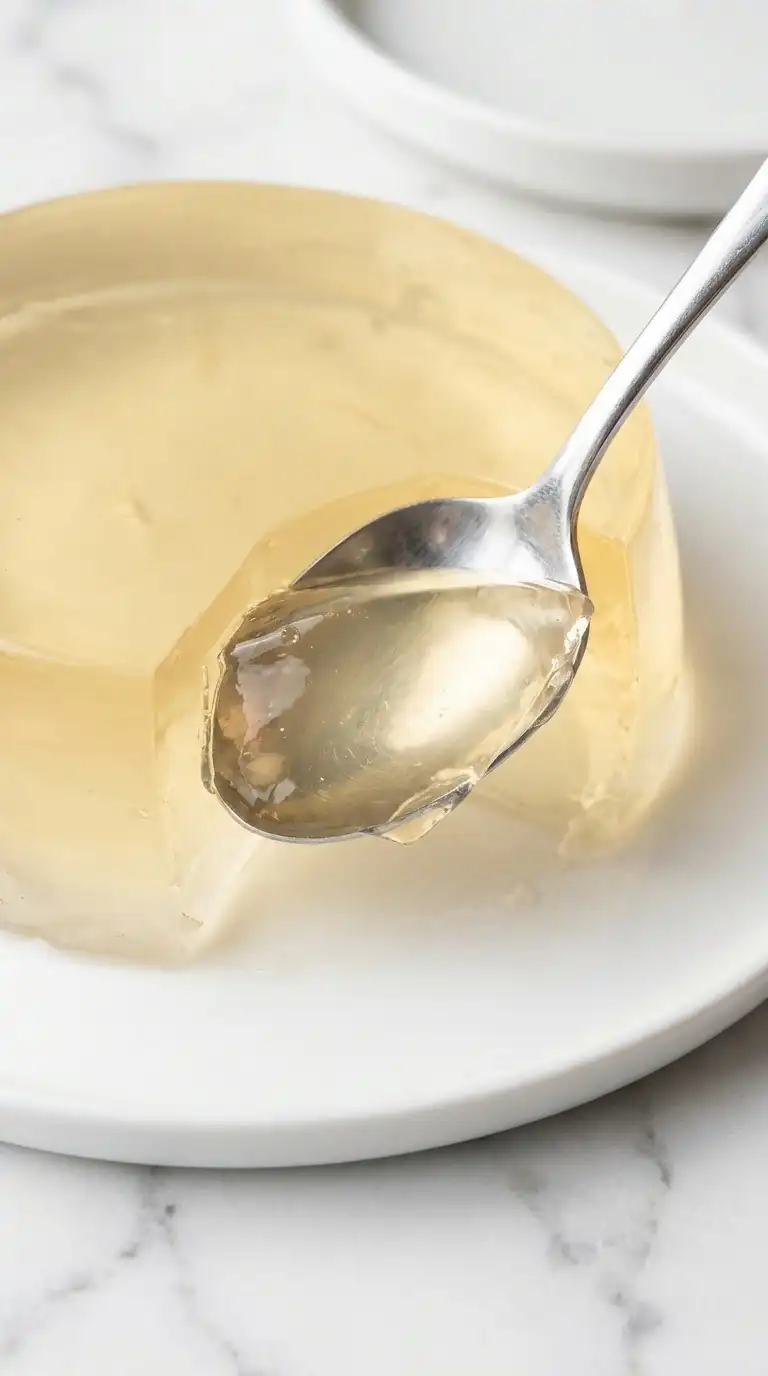
Mastering gelatin ratios empowers you to dictate the precise texture of your dessert. Picture a close-up of a silver spoon lifting a portion from a clear, firm gelatin block: the cut edge is sharp, clean, and perfectly smooth, demonstrating a professional wobbly set. Light passes through the transparent gold gel, highlighting delicate elasticity without any signs of cloudy rubberiness. Achieving this high level of visual and textural elegance requires matching your gelatin proportion to your intended presentation.
For soft spoonable desserts presented inside glass cups, aim for maximum tender meltiness. Use lower gelatin proportions so the gel yields effortlessly under the pressure of a spoon. For molded desserts designed to be unmolded onto flat dinnerware, structure becomes paramount. The outer walls must resist room temperature air without slumping, maintaining a glossy dome contour.
Texture Guidelines by Volume
- Tender Glass Cup Desserts: 3 grams powder per 250 ml liquid. Yields a delicate, barely-there gel.
- Standard Layered Desserts: 4 grams powder per 250 ml liquid. Holds defined layers without bleeding together.
- Freestanding Unmolded Shapes: 5.5 to 6 grams powder per 250 ml liquid. Provides sturdy support for crisp edges and structural release.
Troubleshooting Gelatin Sets and Temperature Control
Even experienced dessert makers occasionally encounter setting failures. Fortunately, understanding how temperature and hydration interact with your gelatin to water ratio allows you to troubleshoot and fix most problems easily.
Problem 1: Gelatin Remains Runny and Will Not Set
If your dessert remains liquid after 6 hours of chilling, common culprits include unbloomed gelatin, overheating above boiling point during melting, or active fruit enzymes. To fix a weak set, heat 2 tablespoons of liquid, bloom an additional 0.5 teaspoon of powdered gelatin in cold water, melt it into the warm liquid, and whisk this mixture into your unset base. Re-chill overnight.
Problem 2: Gelatin is Rubbery, Tough, or Cloudy
A rubbery or cloudy texture indicates too high a ratio of gelatin to water or overheating during dissolving. High heat scorches gelatin proteins, releasing cloudy impurities. To prevent this, never boil gelatin directly. Always remove your base liquid from direct stovetop heat, ensuring it rests between 120°F and 140°F (50°C to 60°C) before stirring in bloomed gelatin.
Problem 3: Gelatin Sets Unevenly with Rubbery Bottom Layer
If a hard rubbery layer settles at the bottom of your dish, the bloomed gelatin was likely added to cold liquid without being fully melted first. Always dissolve bloomed gelatin completely in warm liquid before mixing it into colder ingredients, or warm a small portion of liquid to incorporate the gelatin smoothly.
More Gelatin Recipes to Try
- Gelatin substitutes (agar, pectin, cornstarch, collagen)
- How long jello takes to set (and how to set it faster)
- Homemade gummies
- Jello cups
- Panna cotta
Reader Questions Answered
How much gelatin powder do I need for 1 cup of liquid?
For a standard, delicate set served in a cup, use 1 teaspoon (about 2.8 grams) of gelatin powder per 1 cup (240 ml) of liquid. If you plan to unmold your dessert onto a plate, increase the gelatin powder to 1.5 teaspoons (about 4.2 grams) per cup of liquid for extra structural stability.
What is the standard ratio of gelatin to water for blooming powdered gelatin?
The ideal blooming ratio of gelatin to water is 1:5 by weight. For example, 7 grams of gelatin powder (one standard envelope) should be sprinkled over 35 grams (or about 3 to 4 tablespoons) of cold water. Allow it to sit for 5 to 10 minutes to absorb liquid fully before melting.
Can I substitute sheet gelatin for powdered gelatin 1:1 by weight?
Yes, gelatin sheets and gelatin powder can be substituted equal to weight. Seven grams of powdered gelatin equals seven grams of sheet gelatin. If substituting by sheet count, four standard bloom sheets (Gold or Silver grade) usually replace one standard 7-gram powder packet.
What happens if I boil my gelatin mixture?
Boiling gelatin mixtures above 212°F (100°C) breaks down the delicate protein chains responsible for gelling. High heat permanently weakens setting power, leading to a soft or runny dessert. Always dissolve gelatin in warm liquids kept below a gentle simmer.
How long does gelatin take to set completely in the refrigerator?
Most gelatin desserts require between 4 and 6 hours to set completely at standard refrigerator temperatures (38°F to 40°F / 3°C to 4°C). Larger molds or desserts intended for unmolding benefit from chilling overnight for 8 to 12 hours.
Why did my gelatin dessert turn out rubbery instead of tender?
A rubbery texture is caused by an incorrect gelatin ratio to water, specifically using too much gelatin for the volume of liquid. Measure your ingredients precisely by weight or volume, and adjust downward if your mixture chills longer than 24 hours.
Wrapping Up Your Gelatin Journey
Creating beautiful, consistent gelatin desserts is a rewarding culinary skill that balances simple science with artistic presentation. By learning the fundamental gelatin to water ratio, converting sheet gelatin to powder effortlessly, and understanding proper blooming techniques, you can approach any recipe with complete confidence. Whether you are aiming for a tender panna cotta served in glass or a stunning, crystal-clear amber dome unmolded onto a porcelain plate, precision in measurement guarantees success.
Always remember to bloat your gelatin in cold water, dissolve it gentle warm liquids below boiling, and allow ample chilling time in the refrigerator for protein bonds to mature fully. Keep our ratio chart handy near your kitchen scale, adjust for acidic ingredients, and enjoy crafting elegant, perfectly set desserts every single time!
Related recipes: Mastering Gelatin Substitutes for Perfect Desserts, Why Your Jello Won't Set: Troubleshooting and Fixes, Classic Layered Strawberry and Cream Jello Cake, Classic Vanilla Bean Panna Cotta, Classic Strawberry Jello Cups for Easy Entertaining.
Learn more: Conversion on Wikipedia · food storage & safety (FoodSafety.gov).
◆ ◆ ◆
← Back to Gelatin Ratio & Conversion Guide: Powder vs SheetsGet new recipes
One tasty homemade recipe in your inbox each week. No spam, unsubscribe anytime.


Comments