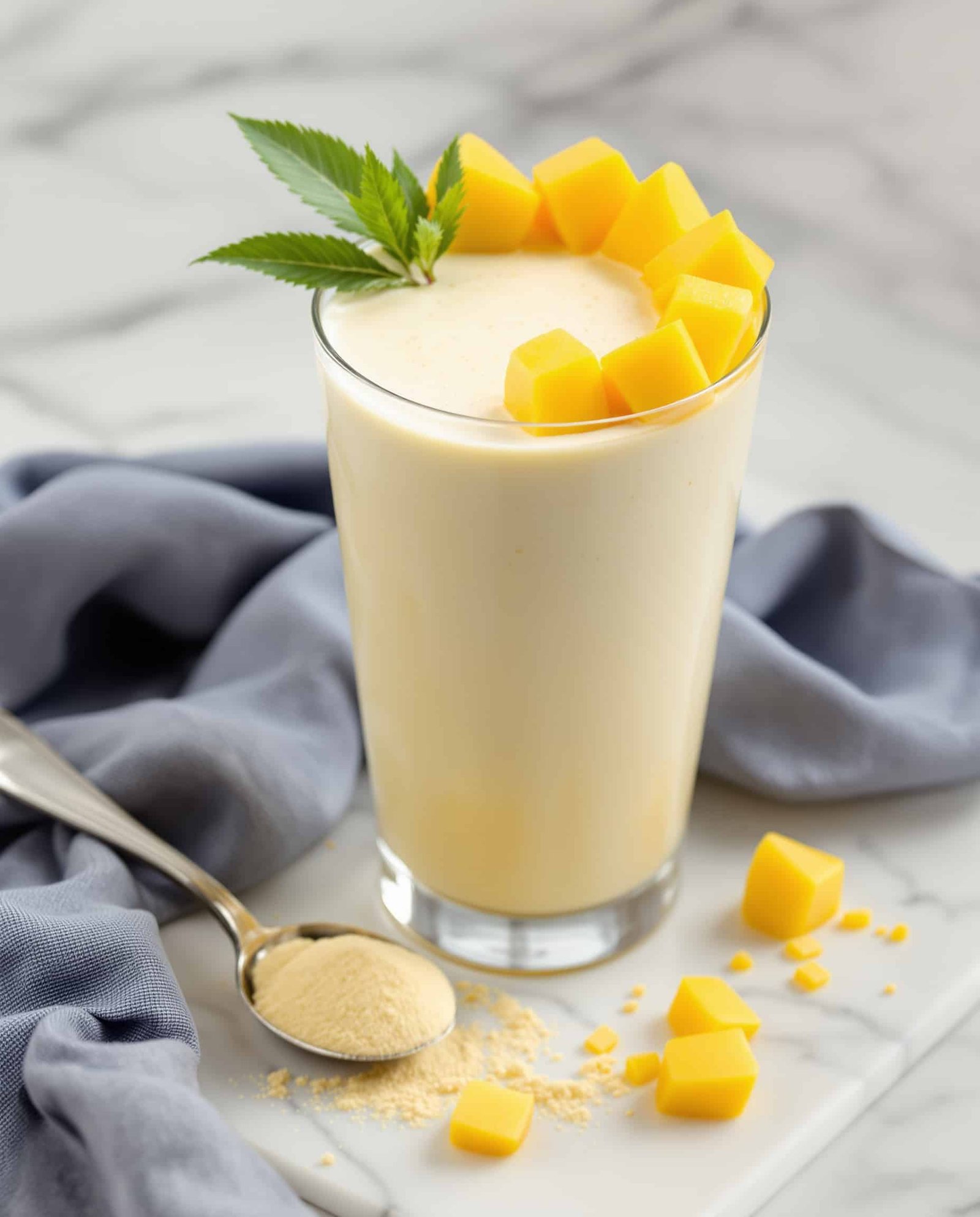
Instructions
- Combine unsweetened almond milk, frozen mango chunks, collagen powder, chia seeds, vanilla extract, and blanc natural food coloring in a high-speed blender.
- Blend on high until completely smooth and creamy. If you prefer a thicker smoothie, add a few ice cubes and blend again.
- Pour into a smoothie glass and enjoy immediately as a satisfying, protein-rich snack or meal replacement.
Key Terms Explained
| Term | Explanation | Why it matters here |
|---|---|---|
| Calorie Deficit | Consuming fewer calories than your body burns, leading to weight loss. | This recipe is designed to be satiating within a calorie-controlled framework. |
| Satiety | The feeling of fullness and satisfaction that reduces your desire to eat more. | Protein and fiber in this smoothie are key drivers of satiety. |
| Collagen Peptides | Small protein fragments, easily absorbed, supporting skin, joint, and gut health. | Adds a significant protein boost for muscle maintenance and satiety. |
| Fiber | Indigestible plant material that aids digestion and promotes fullness. | Chia seeds provide essential fiber, slowing digestion and boosting satiety. |
The Truth About This Recipe
The Truth About This Recipe: While delicious and nutrient-dense, this mango collagen smoothie alone won’t magically shed pounds. Weight loss is fundamentally about creating a consistent calorie deficit over time. This smoothie is a tool – a very good one – to help you feel full and satisfied with fewer calories than a less nutritious option. It’s about smart substitutions and understanding how protein and fiber work to support your energy levels and hunger cues. Don’t fall for the ‘superfood’ hype; focus on the consistent, science-backed principles of eating less than you burn.
Move Your Body
Remember, nutrition is half the equation. Even a brisk 30-minute walk can burn roughly 150-200 calories, almost matching the caloric content of this smoothie. Incorporating regular movement helps increase your TDEE, making that calorie deficit a little easier to achieve. Find an activity you genuinely enjoy, and it won’t feel like a chore.
Delicious Variations
For a lower-carb option, swap half the mango for mixed berries and add a few drops of liquid stevia. If you’re following a Mediterranean approach, consider adding a tablespoon of plain Greek yogurt for an extra protein boost and probiotics. For a more decadent treat (while still being mindful of calories), a tiny swirl of unsweetened coconut cream can add richness, but remember to adjust your other calorie sources for the day.
Healthier Alternatives
Instead of pre-packaged fruit juice (often loaded with added sugar), opt for unsweetened almond milk or water as your liquid base – this dramatically reduces unnecessary calories and sugar spikes. If you don’t have mango, use other low-sugar fruits like berries. For an extra fiber punch, consider adding a handful of spinach (you won’t taste it!) for added vitamins and minerals without a significant calorie increase, helping you feel fuller longer.
Serving Suggestions
Enjoy this smoothie as a quick breakfast on the go, a post-workout refuel, or a satisfying mid-afternoon snack to ward off unhealthy cravings. Avoid pairing it with high-calorie, low-nutrient foods like sugary pastries or fried snacks, as this will quickly negate the benefits of the smoothie. Think of it as a nutritional anchor for your meal, building around it with other whole, unprocessed foods. Combining it with a small portion of healthy fats (like a few almonds) can further enhance satiety.
Storage Instructions
This mango collagen smoothie is best enjoyed immediately for optimal texture and nutrient absorption. If you must prepare it ahead of time, store it in an airtight container in the refrigerator for up to 24 hours. The texture may thicken due to the chia seeds, so you might need to add a splash of water or almond milk and re-blend briefly before serving. Freezing is not recommended as it can alter the texture considerably.
Frequently Asked Questions
Can I use any type of collagen powder?
Yes, but opt for unflavored collagen peptides for the best taste and easiest solubility. Hydrolyzed collagen is generally preferred for digestibility.
Will collagen help me lose weight?
Collagen, as a protein source, can contribute to satiety, helping you feel fuller and potentially reduce overall calorie intake. It’s a supportive tool, not a standalone weight loss solution.
Is mango good for weight loss?
Mango is a fruit, and like all fruits, it contains natural sugars and fiber. Eaten in moderation as part of a balanced diet, it can be a healthy choice. The fiber content can aid satiety.
How often should I drink this smoothie for weight loss?
You can incorporate this smoothie daily as a meal or snack, provided it fits within your overall calorie and macro goals for the day. Consistency is more important than frequency.
What if I don’t like chia seeds?
You can omit them, but you’ll lose out on their fiber and healthy fats. You could try ground flax seeds as an alternative for a similar nutritional boost.
Conclusion
There you have it – a delicious, science-backed mango collagen smoothie designed with your weight loss goals in mind. This isn’t about deprivation or restrictive eating; it’s about making smart choices that empower you. By understanding how ingredients like collagen and fiber contribute to satiety, you’re not just following a recipe; you’re building a foundation of knowledge for lasting health. Remember, weight loss is a journey of understanding and consistent effort, not a sprint for a quick fix. Be kind to yourself, stay informed, and enjoy the process of nourishing your body. You’ve got this.